
In an age of homogeneity, provenance is the differentiator
Ancient palazzos, secluded fincas and medieval fortresses. These careful restoration projects prove that the most compelling hotels often have stories already written into their walls.
There is a fine line between familiarity and predictability. Somewhere between a mid-century club chair and a fringed velvet cushion, a singular idea of good taste began to take hold. You might be in Mumbai, London or Bangkok, but it’s often hard to tell amid the potted fiddle-leaf figs and sandalwood scent that drifts through the air.
“One can travel halfway around the world and arrive in a hotel looking rather like the one they left that morning,” says architect and designer Bill Bensley. “The great danger is that luxury hospitality has confused consistency with sameness. You want to feel that you have entered a place rather than a brand.”
It is why, more than ever, provenance is important. Heritage buildings possess an inherent character that cannot be replicated, offering a unique stage for a hotel’s identity. Historic restoration has become a powerful marker of luxury, aligned with artisan craftsmanship and local storytelling.


Reclaiming character
In 2017, Venice prohibited the creation of new hotels on its main island, reinforcing a shift towards the reinvention of existing palazzi and heritage buildings. This has encouraged hotel groups such as Aman, Rosewood and Four Seasons to look beyond new construction, instead bringing some of the city’s most significant historic properties back to life. Among the most extraordinary is the Orient Express Venezia, which opened in 2026.
The eight-year restoration was led by architect Aline Asmar d’Amman, globally renowned for bridging heritage with contemporary design. “The frescoes above, the scars on the wall. These buildings carry the whispers of enduring stories; they are a getaway to the realm of dreams and fantasy,” she says.

The hotel called for rare interventions, including the careful removal, treatment, and reinstatement of each stone across the walls and floors. “I became fascinated by the way stone absorbs memory, often reflecting on how Ruskin described the stones of Venice as flesh,” she recalls. “I fell in love with their faded pigments and the patina created by water and time.”
In signature suites, rediscovered cherubic friezes dance above moire silk walls, while bespoke Murano glass chandeliers hang “like giant pieces of jewellery”. A marble fireplace is adorned with caryatids by Antonio Dal Zotto, while shell-shaped coffee tables by Marseille’s Southway Studio are dotted throughout.
The approach reflects Asmar d’Amman’s wider philosophy, where “artistry and craftsmanship are the ultimate luxury.”

The family-owned Vestige Collection is known for transforming dilapidated fincas and farm buildings across Menorca, an island whose strict planning and heritage protections have long encouraged adaptive reuse over new development.
Husband-and-wife founders Victor Madera and Maria Obdulia Fernández first restored Palacio de Figueras as their home. The project took 11 years to complete, and sparked a passion for reviving historic properties. Today, alongside their daughter, Marta Madera Fernandez, they oversee a growing portfolio that includes three hotels, Son Vell, Son Ermità and Binidufà, as well as four private estates available for exclusive hire.
Collaborations with local craftspeople are central to each project, including stonemasons, carpenters and plasterers. “One of the greatest challenges is finding the balance between preservation and adaptation,” says Marta Madera Fernandez. “We don’t restore buildings as museum pieces. The past must coexist with modern hospitality standards.”
Technical complexities have included adding insulation between huge slabs of stone, alongside incorporating efficient water and energy management systems. “Another challenge is balancing environmental responsibility with guest’s expectations of comfort and luxury,” she says.


Their impact extends beyond architectural preservation. “There are lots of buildings like this across the island, which are abandoned and in a state of disrepair, because it takes a lot of money to maintain or restore them,” says Enrique Motilla Saiz, the architect behind Son Vell’s transformation. “By taking on a big piece of land and putting in only a small number of rooms, the owners are searching for a new model of tourism that is low density and works closely with locals.”
Together, these examples demonstrate how thoughtful planning policy can curb high-density development while supporting the preservation of character and landscape.

Built to last
“The greenest building is frequently the one already standing,” asserts Bill Bensley. “Demolishing and replacing it with a supposedly sustainable glass box covered in certificates can be a rather elaborate form of nonsense.”
Adaptive reuse has become a core pillar of sustainability, extending the life of existing buildings while reducing the need for carbon-intensive new construction. Bensley worked with The Siam in Bangkok to carefully restore and repurpose historic teak structures, giving them a new life within a hotel that celebrates the city’s architectural heritage. At the InterContinental Khao Yai Resort, also in Thailand, he salvaged decommissioned Thai railway carriages to create luxury suites, drawing on the country’s railway heritage.
He warns however restoration is only one part of the equation. “A beautifully restored building can still waste water, import strawberries by plane and wash every towel. The daily operation still matters enormously.”
From resurrected palazzi to rural estates, we highlight inimitable and ambitious restoration projects around the world, where artistry, heritage and contemporary hospitality converge.


Castelfalfi, Tuscany, Italy
Why we rate it: A self-sufficient village revival steeped in Tuscan heritage
Address: Località Castelfalfi, 50050 Montaione, Florence, Italy
Price: From From 820 EUR / 936 USD per night
Tuscany has no shortage of agriturismo transformations, but few match the ambition of Castelfalfi, which has gone beyond restoring a single property to regenerate an entire village. Positioned between Pisa and Florence, the hilltop hamlet was once home to just two residents. It is now a thriving five-star resort, which courts couples and families for its mix of sybaritic wellness, outdoor pursuits and local gastronomy.
The restored borgo is home to the Church of San Floriano, named after Castelfalfi’s patron saint, alongside a string of shops, a gelateria, bar and deli. 1,100 hectares of agricultural landscape form the backdrop, home to vineyards and olive groves where organic extra virgin olive oil is cold-pressed in the estate’s own mill. Guests can join truffle hunts in the surrounding forest, as well as lake fishing, falconry, beekeeping experiences and e-bike tours through the estate.
Sustainability is taken seriously: a network of wells, lakes and a water-purification plant enables self-sufficiency, while a wood biomass heating and cooling system supplies energy across the estate. The restaurants follow a “zero kilometre” philosophy, sourcing ingredients locally to reduce transport emissions.


Cap Rocat, Mallorca, Spain
Why we rate it: An ancient citadel turned secluded luxury escape
Address: Carretera d’Enderrocat, s/n, 07609 Cala Blava, Mallorca, Spain
Price: From 1000 EUR / 1141 USD per night
Historic fincas and farmhouses punctuate Mallorca’s rich boutique hotel scene, but few restoration projects rival Cap Rocat. A former 19th-century military fortress, the property was carefully restored by architect Antonio Obrador over 15 years, earning several international awards including a European Union Prize for Cultural Heritage and a Europa Nostra Award for conservation.
Set within a 30-hectare nature reserve overlooking a stretch of protected coastline, it houses just 30 spacious rooms and suites, many carved into cliffs and within former military quarters. Raw sandstone walls and vaulted ceilings are softened by linen and handcrafted textiles, ensuring contemporary comfort.
Sip a crisp glass of local wine on a secluded terrace with a gentle sea breeze, and dine at The Sea Club, perched above the Balearic waters. Fine dining takes place at La Fortaleza, where flaming torches illuminate a former fortress courtyard. A subterranean spa sits 12 metres below ground, with a saltwater pool carved into a natural cave.
Also check out Hotel Corazon, a boutique stay within a transformed 16th-century finca.

Parador de Granada, Spain
Why we rate it: Sleep within the Unesco-listed Alhambra
Address: Calle Real de la Alhambra, s/n, 18009 Granada, Spain
Price: From 250 EUR / 285 USD per night
Spain’s Parador hotels are state-owned and were originally established to preserve the heritage of historic buildings while promoting tourism in slower regions. Today, they occupy castles, monasteries and convents, often costing far less than their luxury contemporaries.
Parador de Granada occupies a 14th-century Moorish palace, later converted into a convent, in the grounds of the Unesco-listed Alhambra complex in Granada. After the day’s visitors depart, its privileged setting allows guests to explore one of Spain’s most remarkable historic sites after hours, taking in Islamic architecture and original ornate tilework.
There are 36 simple contemporary rooms, while the terrace restaurant overlooks the fragrant Generalife gardens and Alhambra’s former Moorish baths.
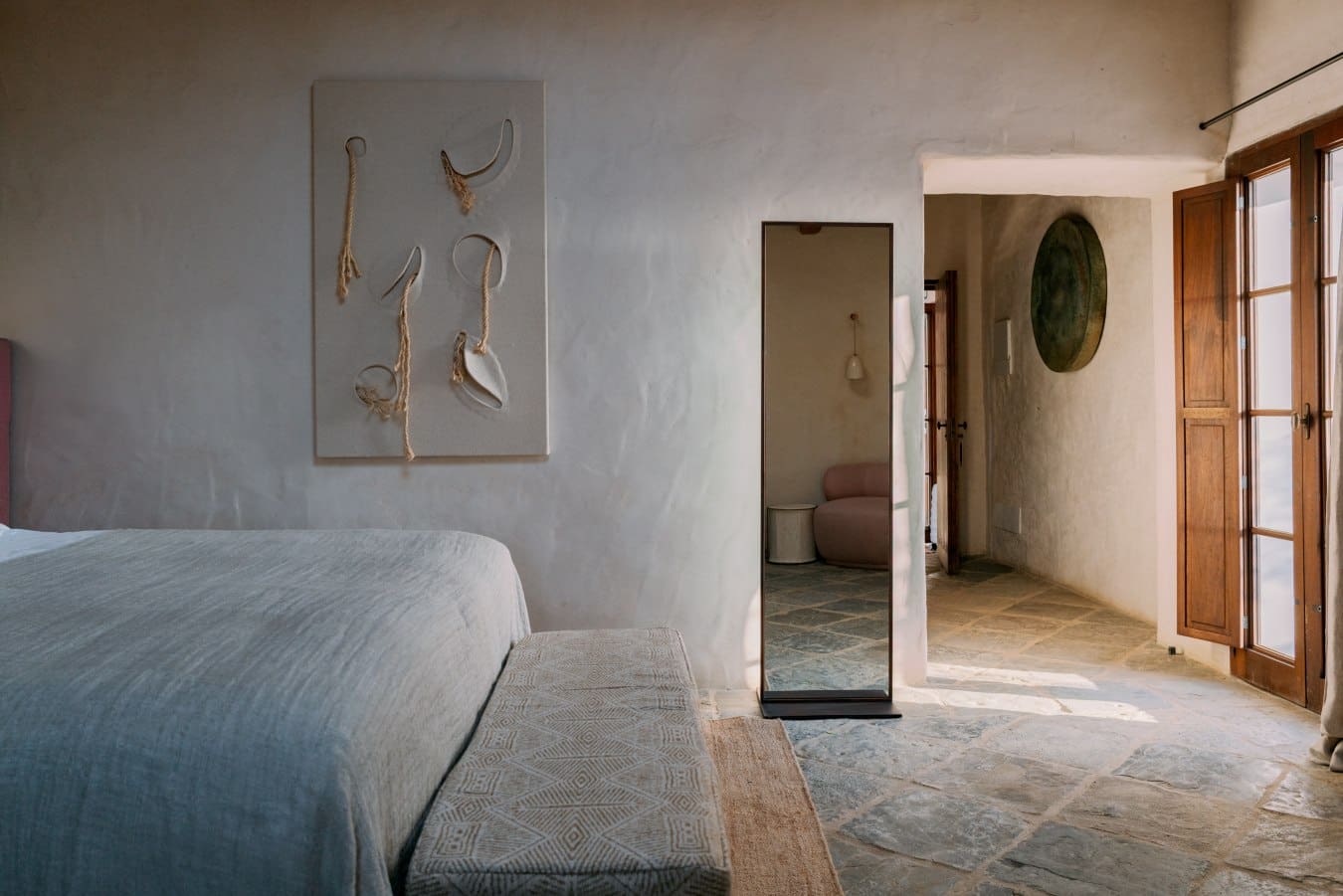
Son Ermità & Binidufà, Menorca, Spain
Why we rate it: A finca retreat built on centuries of storytelling
Address: Diseminado Binidufa, 18, 07750 Ferreries, Menorca, Spain
Price: From 500 EUR per night
Son Ermità and Binidufà are sibling hotels, each set in an 18th-century neoclassical finca on Menorca’s northern edge. They are separated by an ancient forest, covering 800 hectares of farmland, orchards and coastal landscape. Each hotel has 11 suites, with original beams and bespoke carpentry in soothing earthy tones, while bathrooms stand out for their sculptural stone basins and limewash plaster.
Sweet idleness is encouraged, whether lingering over freshly caught seafood and citrusy salads in the restaurant, or lounging by one of three outdoor pools. For more active pursuits, walking trails lead to nearby sandy coves, or guests can venture further on complimentary mountain e-bikes.


Rosewood Amsterdam, Netherlands
Why we rate it: An art-laden stay in the former Palace of Justice
Address: Prinsengracht 432 – 436, 1017 KE Amsterdam
Price: From 910 EUR / 1039 USD
Rosewood has a rich history of hotel restoration projects, ranging from the transformation of a Bavarian bank in Munich to the former United States Embassy building in London. Among its most impressive is the Rosewood Amsterdam, which opened in 2025 following a decade-long renovation. The hotel occupies the former Palace of Justice, a neoclassical building stretching along the Prinsengracht canal.
Despite its institutional origins, the hotel is warm and welcoming, with an all-day cafe designed to attract locals and light, bright rooms with curvaceous sofas and chairs throughout. Two courtyard gardens are landscaped by designer Piet Oudolf, while a spa and swimming pool rest in the basement.
Aligned with Rosewood’s DNA, art is a big draw. A 1,000-piece collection rivals that of nearby museums, including ample space given to interactive sculptures. You can also purchase a keepsake ceramic spliff by artist Casper Braat.
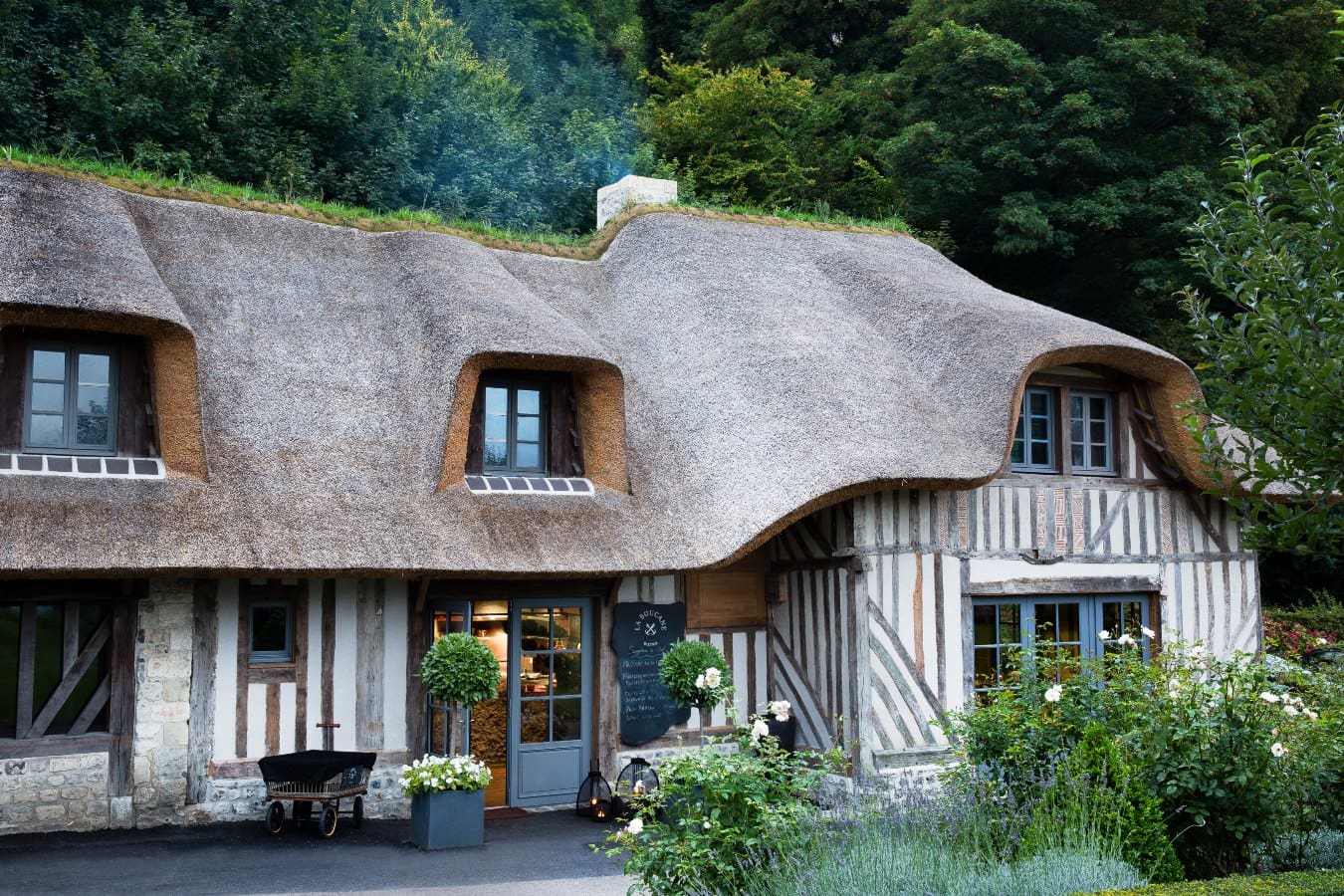
La Ferme Saint-Siméon, Honfleur, France
Why we rate it: A farmhouse with an Impressionist past
Address: 20 Rue Adolphe Marais, 14600 Honfleur, France
Price: 350 EUR per night
La Ferme Saint-Siméon is part of the prestigious Relais & Châteaux collection, renowned for its independently owned hotels in historic settings. The family-owned hotel occupies a 17th-century farmhouse, once a humble inn frequented by Claude Monet, Eugène Boudin and Gustave Courbet.
Rustic interiors feature exposed wooden beams, antique furnishings and crackling fires in winter, while views of the Seine estuary and apple orchards are not dissimilar to a Monet painting. A fine dining restaurant, Les Impressionnistes, showcases Norman produce, while La Boucane is a charming thatched-roof bistro centred on wood-fired cuisine. Set above Honfleur, the hotel is a ten-minute walk from its historic harbour, galleries and seafood restaurants.

Orient Express Venezia, Venice, Italy
Why we rate it: Venetian glamour in excelsis
Address: Fondamenta di Cannaregio 675, 30121 Venice, Italy
Price: From 1500 EUR / 1,712 USD per night
When Orient Express forayed into hotels, it was never going to be boring. Following the opening of La Minerva in Rome, the group transformed the centuries-old Palazzo Donà Giovannelli into one of Europe’s most magnificent heritage hotels.
Led by architect Aline Asmar d’Amman, original frescoes, mosaic floors and carved stonework were meticulously restored to preserve the building’s Neogothic and Baroque heritage, infused with contemporary Italian glamour. Theatrical tactility abounds, with crackled lacquer, sculpted wood and polished marmorino plaster. Interiors channel the legendary train’s savour-faire, from vintage train trunks repurposed as bedside tables to marquetry recalling the craftsmanship of historic carriages.
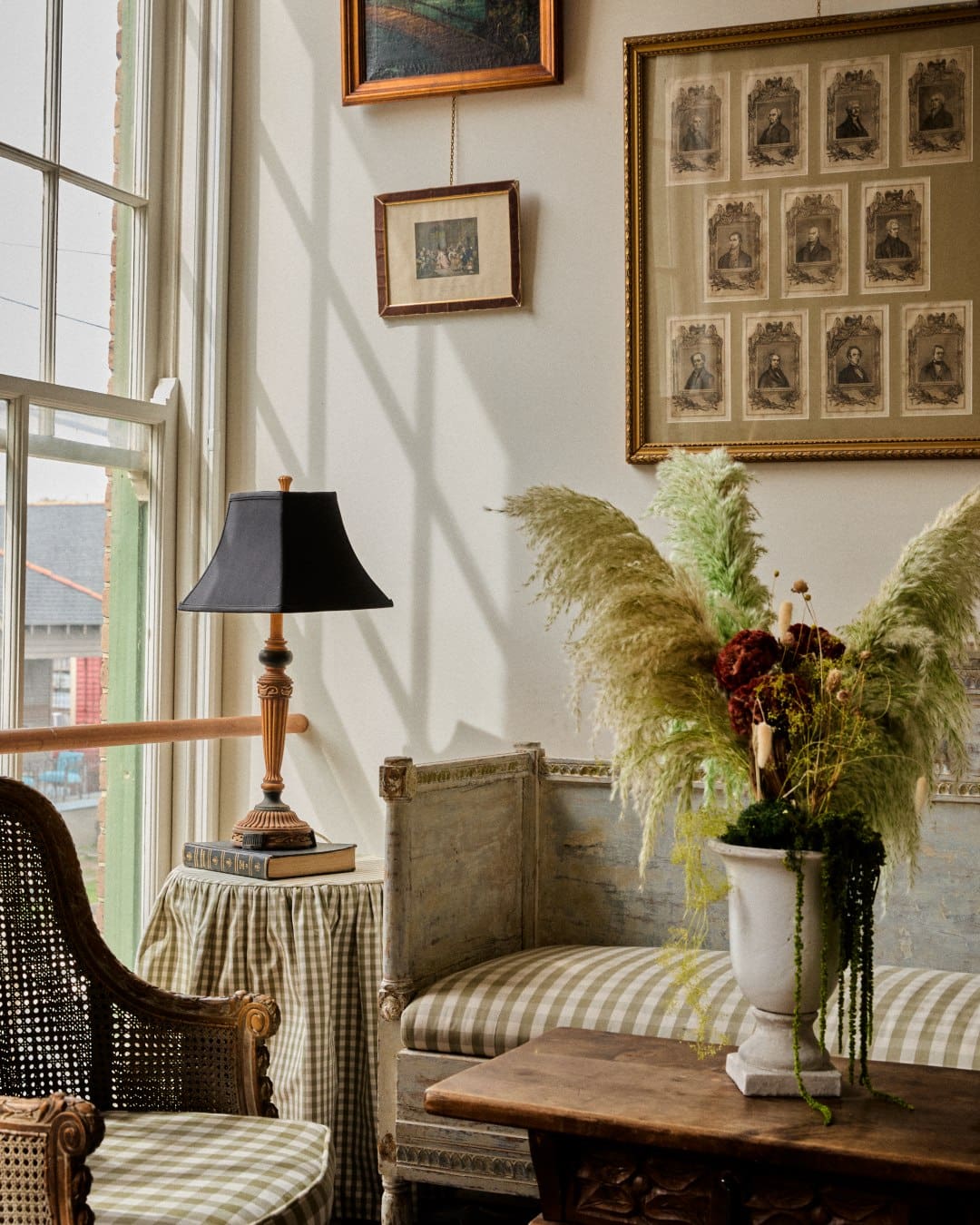

Hotel Peter & Paul, New Orleans, USA
Why we rate it: A church reborn as a theatrical neighbourhood stay
Address: 2317 Burgundy Street, New Orleans, LA 70117, USA
Price: 250 USD per night
New Orleans resident Nathalie Jordi transformed a 19th-century Catholic church complex in the city’s buzzy Faubourg Marigny neighbourhood with the help of New York-based Ash. The boutique hotel pays homage to its former ecclesiastical heritage, preserving original architectural details including stained-glass windows and soaring ceilings. A newly opened outdoor swimming pool is inspired by historic bathhouse culture, providing welcome respite from the city’s sultry summers.
The Elysian Bar occupies two former Rectory parlours, creating a majestic backdrop for Gulf Coast flavors and drinks, with happy hour running each day from 3 to 5pm and regular ‘bring your own vinyl’ evenings. Italianate fireplaces, painted trompe l’oeil armoires and canopy king beds enhance the hotel’s theatrical character, with swathes of gingham and rich jewel tones.

Siri Sala, Bangkok, Thailand
Why we rate it: A restored teak house honouring Thai craft
Address: Charan Sanit Wong Road, Arun Amarin, Bangkok Noi
Price: From 20,000 THB / 634 USD per night
Siri Sala offers a quieter glimpse of Bangkok, perched on a canal along the western bank of the Chao Phraya River. Visionary couple Irma Go and Kirati ‘Art’ Thepsoparn purchased a trio of traditional stilt houses and worked with local craftsmen to restore and upcycle architectural elements of each building, creating an intimate hideaway on the water’s edge. Guests can book one of five bedrooms, which each sleep two, or book the entire villa. If it looks familiar, you may recognise it from The White Lotus Season three.
Dinner is cooked by a private chef, cocktails are served poolside or in the charming Heritage House and fresh herbs are picked from the garden. Explore surrounding Bangkok Noi, where local markets and centuries-old temples preserve the flavour of old Bangkok.


