How coffee culture captured the hotel market – and what’s brewing next
Hotel coffee has evolved from in-room sachets to partnerships with artisan roasters and espresso-fuelled social spaces that act as community hubs. We spotlight the hotels crafting the perfect blend
Not so long ago, hotel coffee equated to little more than instant packets and feed-them-fast brews, perhaps a pod if you were lucky. It was synonymous with convenience, conference rooms, powdered milk and landfill-destined disposable cups. Tentative sips often left you wondering: is this the best that hotels can do?
Cut to today, and the world’s leading hotels boast impressive coffee credentials, from gleaming espresso machines on display in lobby cafes and collaborations with local roasters to sincere sustainability initiatives. It reflects a buzzing and insatiable coffee culture, in which baristas are given equal billing to mixologists and clued up guests know their cappuccino from their cortado.


“Hoteliers now recognise that coffee plays a much larger role in shaping the guest experience and can be a powerful expression of a property’s identity,” says Giulia Spanio, general manager at Modbar, the under-counter espresso system from La Marzocco. Its slim taps accept hotel bars across Aman, Four Seasons and Ace properties, creating a more direct connection between barista and guest. “People are looking for experiences that feel connected to the place they’re visiting.”
At Le Pigalle in Paris, Café Pigalle is a favourite with the area’s creative set, who spill out onto the street clutching cups brewed with beans by local roastery Lomi, alongside blends from La Main Noire. The cafe has embedded the hotel in the neighbourhood, making it as much a destination for locals as it is for hotel guests.


"Coffee has become a touchpoint for wellness, sustainability and storytelling”
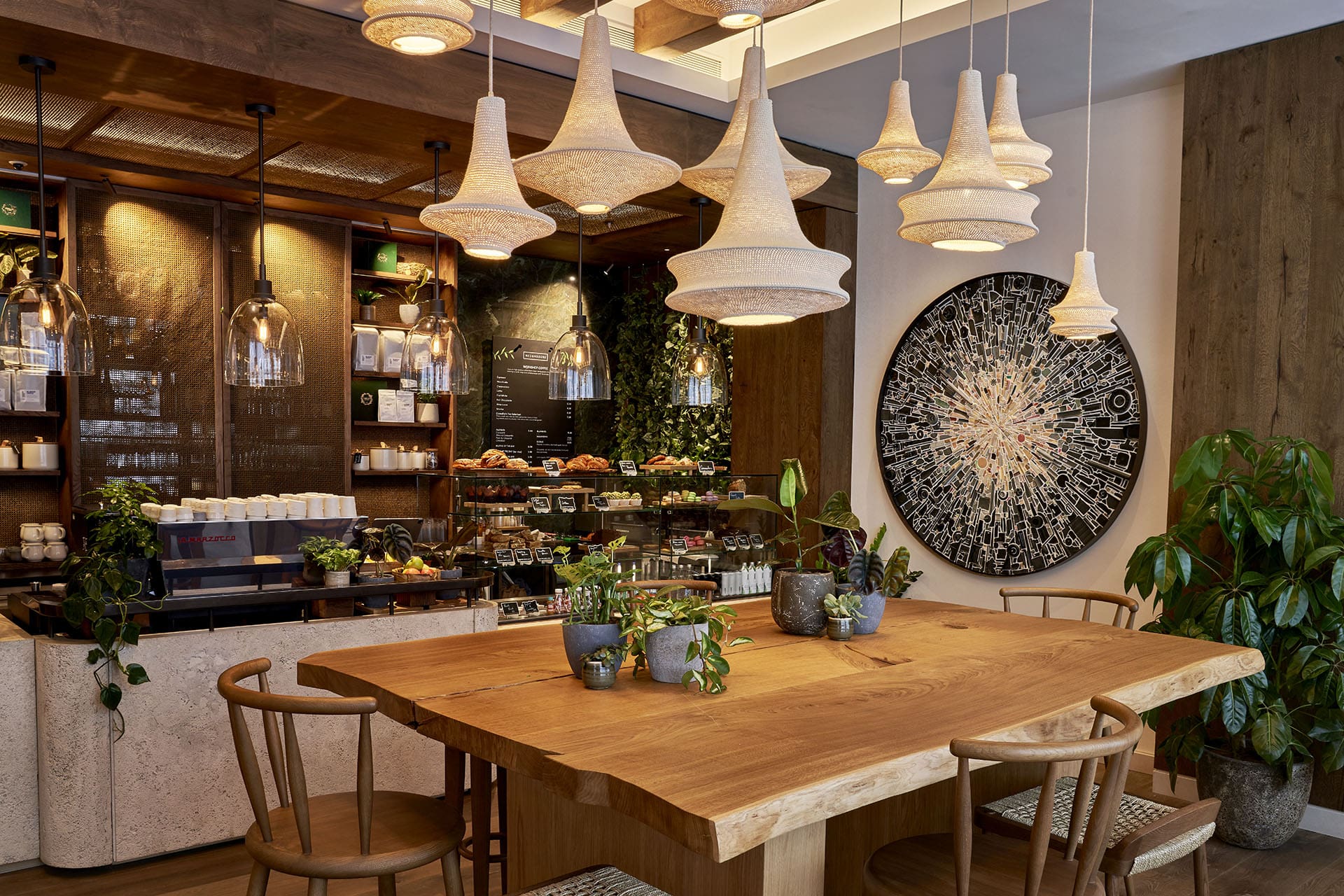
In London, 1 Hotel Mayfair’s cafe, Neighbours, draws guests and locals alike for its thoughtful menu of fair-trade coffee. You can order a Resilient Phyto Nectar Latte, blended with turmeric root, vitamins C and D, zinc, sea buckthorn, chaga mushroom and mango; or a Focused Phyto Nectar Latte, with spiced chocolate nectar, gotu kola, ginseng, cordyceps mushroom and lion’s mane mushroom. Guests sit at a long communal table hand-hewn from raw timber or take their drinks to go in biodegradable cups.
The concept is also available across other 1 Hotels properties including New York, Nashville, South Beach and the new 1 Hotel Melbourne. “We don’t see coffee as a commodity or a push button amenity, we see it as an opportunity to reflect our values,” says Fernando Cruz, corporate culinary director at Starwood Hotels, the company behind the 1 Hotels brand. “We strive to elevate something often deemed ordinary into a memorable moment. Coffee has become a touchpoint for wellness, sustainability and storytelling.”
Brewing sustainability
The world produces around 10 million tonnes of spent coffee waste globally according to studies by RMIT University. Adding bio-mass and coffee packaging, Roadbook estimates total waste to be closer to 60 million tonnes. While the travel industry is responsible for only a fraction of this figure, any hotel with an authentic sustainability outlook is finding responsible waste solutions. Across the 1 Hotels portfolio, upcycled coffee grounds are used in spa treatments and expresso martinis, while Nespresso-compatible capsules are compostable.
“Waste production in a large hotel is, of course, enormous. We have a responsibility to reduce our impact,” says Daniel Hrkać, head of brand operations at 25hours, a lifestyle hotel group with locations across Europe and Dubai. Rooms feature Caffè Musetti compostable pods, and some have pour-over coffee makers.
“Guests want more than just convenience, they want great coffee and are often interested in a more hands-on brewing experience. Pour-over kits elevate the in-room experience and showcase the quality of our offering in a more personalised way.”
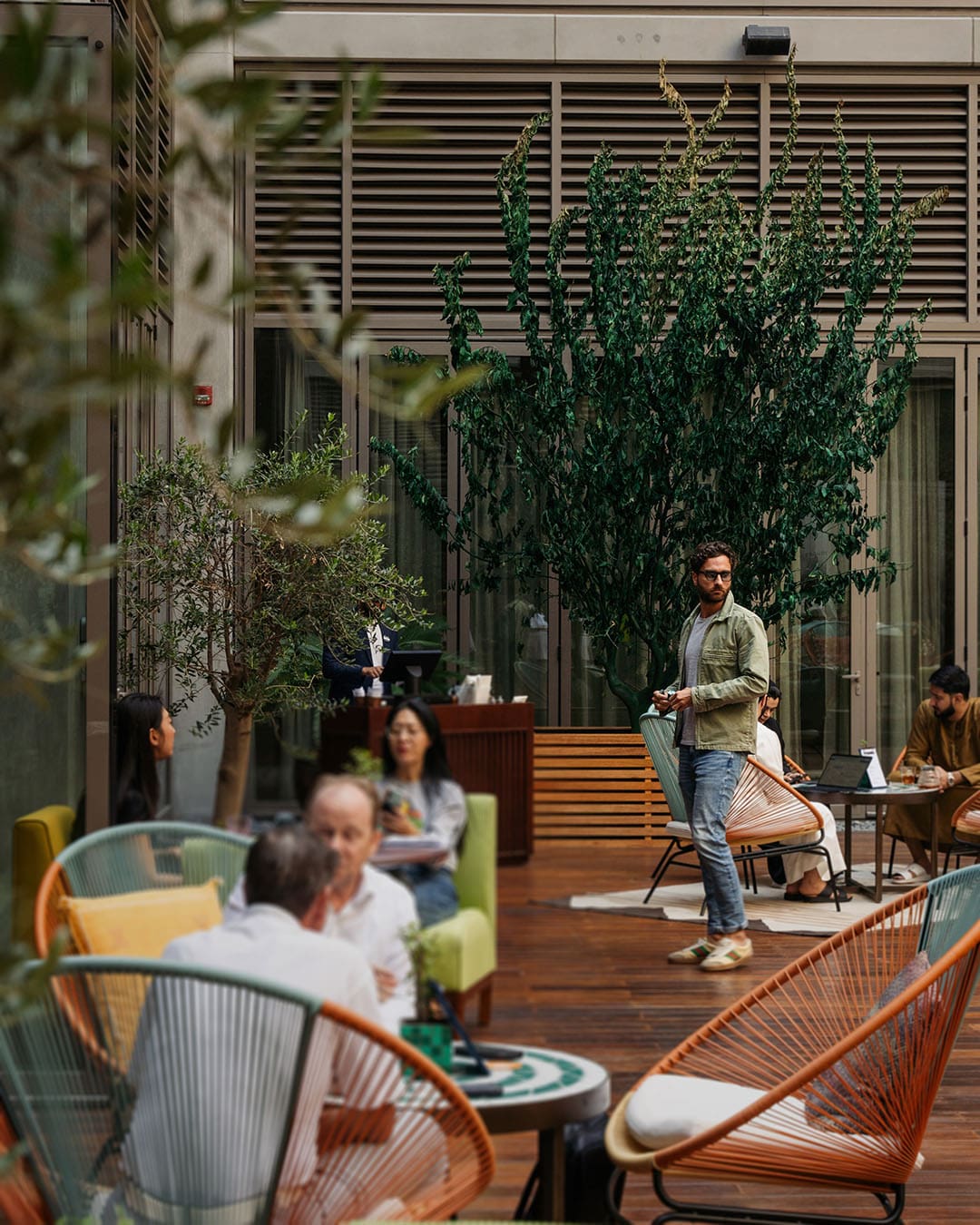

At 25hours Hotel Dubai One Central, the Nomad Day Bar cafe works with local roaster Nightjar Coffee and is considered one of the best spots in the city to enjoy a cup. Guests linger with laptops across the airy, indoor-outdoor space, sipping from an international menu that includes a piccolo (miniature latte); Spanish latte (sweetened with condensed milk) and pour-over varieties. A similar concept can be found at 25hours Hotel Paper Island in Copenhagen, where Social Brew coffee is met by an eclectic programme of music and culinary pop-ups.
“The decision to elevate our coffee programme was driven by our guests, who want a high quality, locally rooted experience,” continues Hrkać. The group hopes to replicate the success of Dubai’s Nomad Day Bar with new cafe spaces in Cologne and Berlin, which reflect “the continued demand for co-working spaces”.
Meanwhile, The Emory in London offers a bespoke blend with Kiss the Hippo, London’s first carbon-negative roaster. Made from single-origin Brazilian coffee, the flavour is tweaked seasonally. Five-star suites are equipped with Morning machines, which allow users to control elements such as temperature, pressure and water ratio. “I wanted the coffee to be a cut above the copy-and-paste Nespresso machine,” says Charley Pope, the hotel’s head of coffee.
“I’ve always been a single-origin drip guy – no milk, no sugar, no fuss,” asserts Roadbook co-founder Fouad Ghanma. “There’s quiet confidence in knowing exactly how you like your coffee. Great hotels recognise that remembering your order isn’t just good service, it forges an emotional connection.” You might find him at the ground floor cafe of Kimpton Maa-Lai Bangkok, where beans are supplied by his favourite weekend locale, Karo Coffee Roasters, or in the buzzy Parlor at The Standard, Mahanakhon, which works with the city’s Pacamara Coffee Roasters.
The world’s first coffee hotel
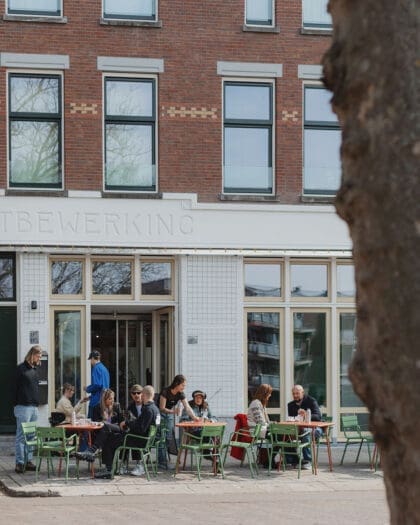
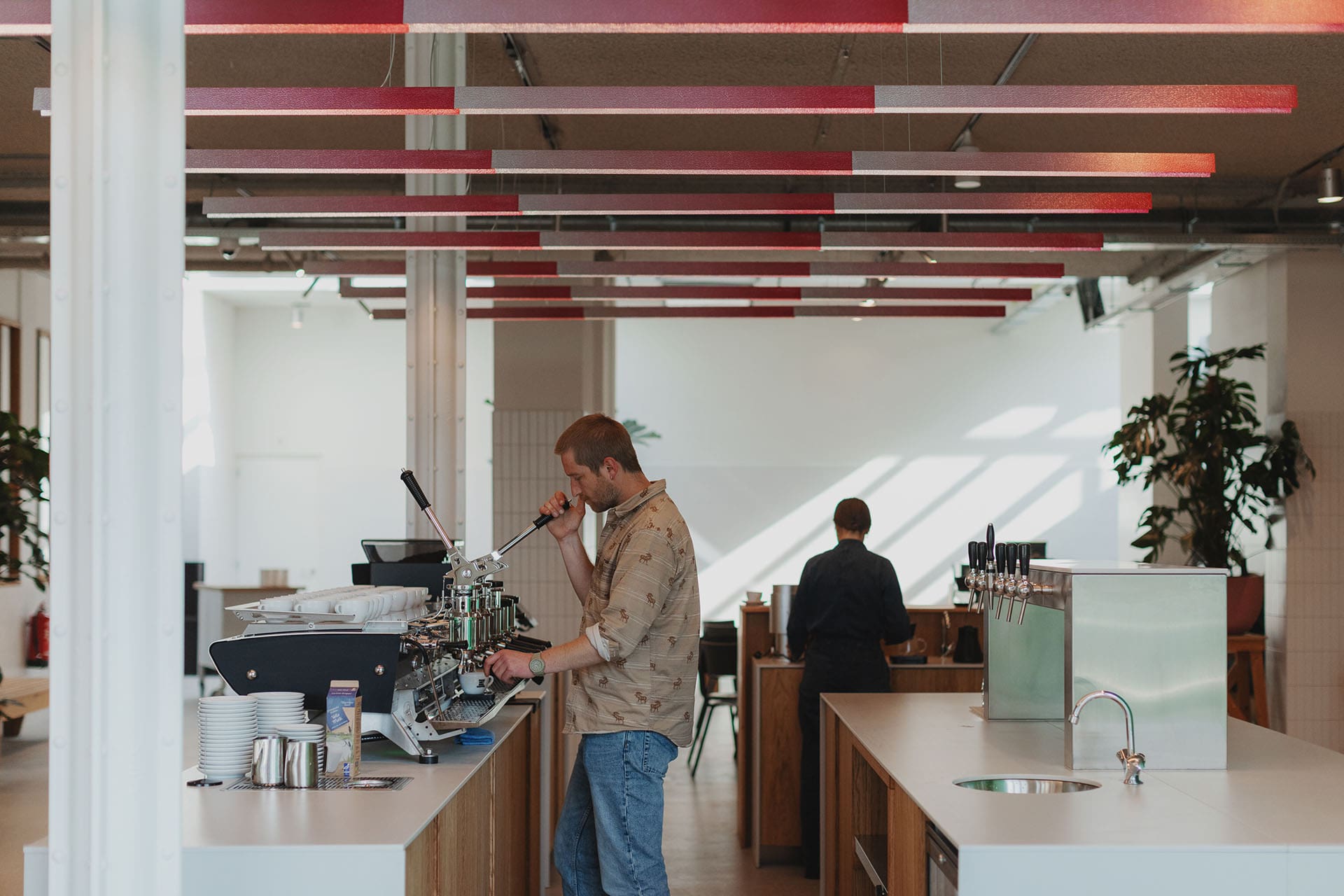
Opened in March 2025, Man Met Bril Koffie bills itself as Europe’s first coffee-centric hotel. Founded by Paul Sharo, 20 rooms and suites are met by a roastery, training space and podcast studio. The hotel has ambition to be a European hub for coffee culture, with a residency programme that invites top baristas to live and work at the hotel. Drinks are brewed using a one-of-a-kind machine created by Kees van der Westen, noted for its creative, Willy Wonka-style approach. The gleaming piece of machinery groups three espresso machines together – a world first – and takes pride of place in the ground floor cafe, alongside a large-scale artwork by Thomas Trum.
Sharo opened the hotel in response to a rise in Rotterdam tourism. “We wanted to provide a place to stay, which also reflects the city’s thriving coffee culture,” he says. Don’t expect pillowcases made out of coffee bags, though; the design is “simple and clean, with a focus on Dutch designers. We are a destination for people who love making and drinking coffee.”


Beyond just a caffeine fix, people now seek an aesthetic, ritualistic and often social experience
Where next for hotel coffee culture
Time and again, leading voices highlight that when done right, hotel coffee transcends convenience to foster community, connection and a sense of place – whether that’s over an iced ca phe sua da in Ho Chi Minh or cream-topped Einspänner in Vienna. Lively, caffeine-fuelled social spaces now thrive in once-empty hotel lobbies, and baristas have the freedom to experiment with innovative flavour combinations. As coffee tourism gains momentum, collaborations with local roasters also bridge the connection between a hotel and the local neighbourhood.
Forget a supercar out front, it’s the coffee machine inside that we’re picking up on. These polished pieces of machinery are modern status symbols, from bespoke models to Italian icons. Similarly, many engaged guests will judge the quality of a hotel on its coffee credentials.
Coffee is also increasingly viewed as a luxury commodity, with a growing market of niche varieties and artisanal blends. While global demand is rising, the effects of climate change on supply is also driving prices up.
“The biggest change is the elevation of coffee from a daily habit to an intentional, curated experience,” says David Cutler, head of training at Lavazza Coffee. “Consumers are now interested in quality and origin. It is also transforming coffee into a lifestyle symbol. For enthusiasts, it reflects their values, aesthetics and identity.”

“Hotels that take coffee seriously are no longer just serving guests, they’re becoming part of the neighbourhood’s daily rhythm,” says Nicholas Demasi, senior vice president of food and beverage at Starwood Hotels. “Thoughtful coffee programmes bring in locals and travellers alike, creating a natural energy in our spaces. That kind of connection often supports broader interest in the hotel, from dining to events and beyond.”
“Beyond just a caffeine fix, people now seek an aesthetic, ritualistic and often social interaction,” agrees David Cutler of Lavazza. “Meanwhile, technological integration, from mobile ordering apps to AI- driven brewing, offers unprecedented convenience and precision.”
Coffee is personal, and becoming more personalised. “It’s an experience,” summarises Giulia Spanio of Modbar.. “From that first cup at breakfast to an after-dinner espresso.” Make ours a double.