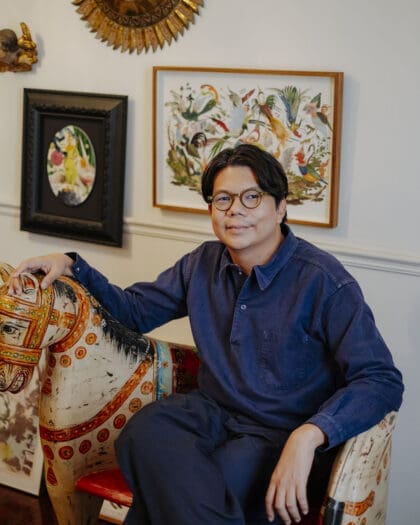
Collage artist Nakrob Moonmanas cuts through Thailand’s layered past
Bangkok’s king of collage Nakrob Moonmanas translates Thai heritage into intricate contemporary forms, playfully examining the country’s shifting identity through a new and imaginative lens
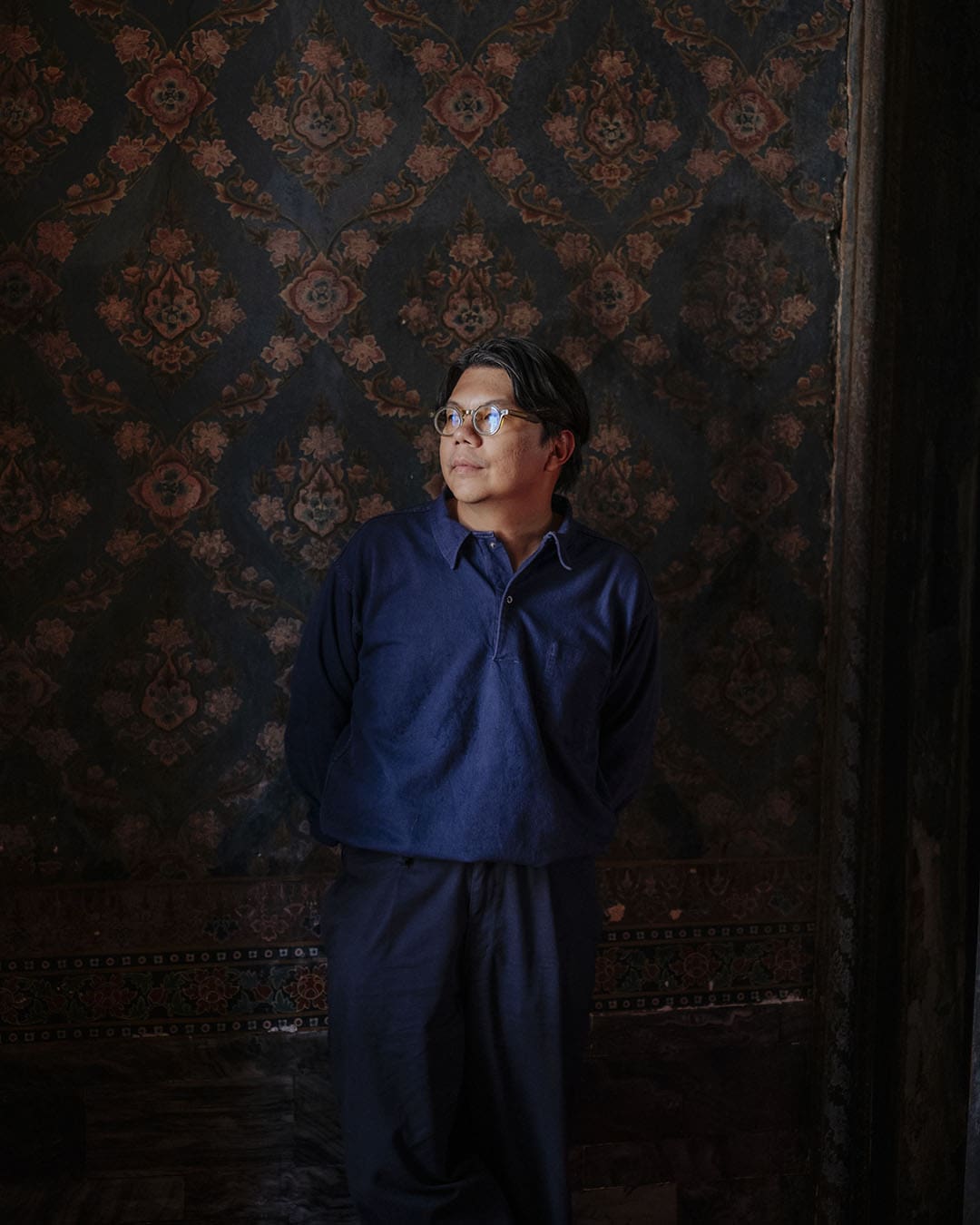
“Bangkok already feels like a collage. Old buildings stand beside new ones, unfinished structures next to temples and shopping malls,” says multidisciplinary artist Nakrob Moonmanas. “That visual logic, and sometimes its lack of logic, strongly influences how I compose images.”
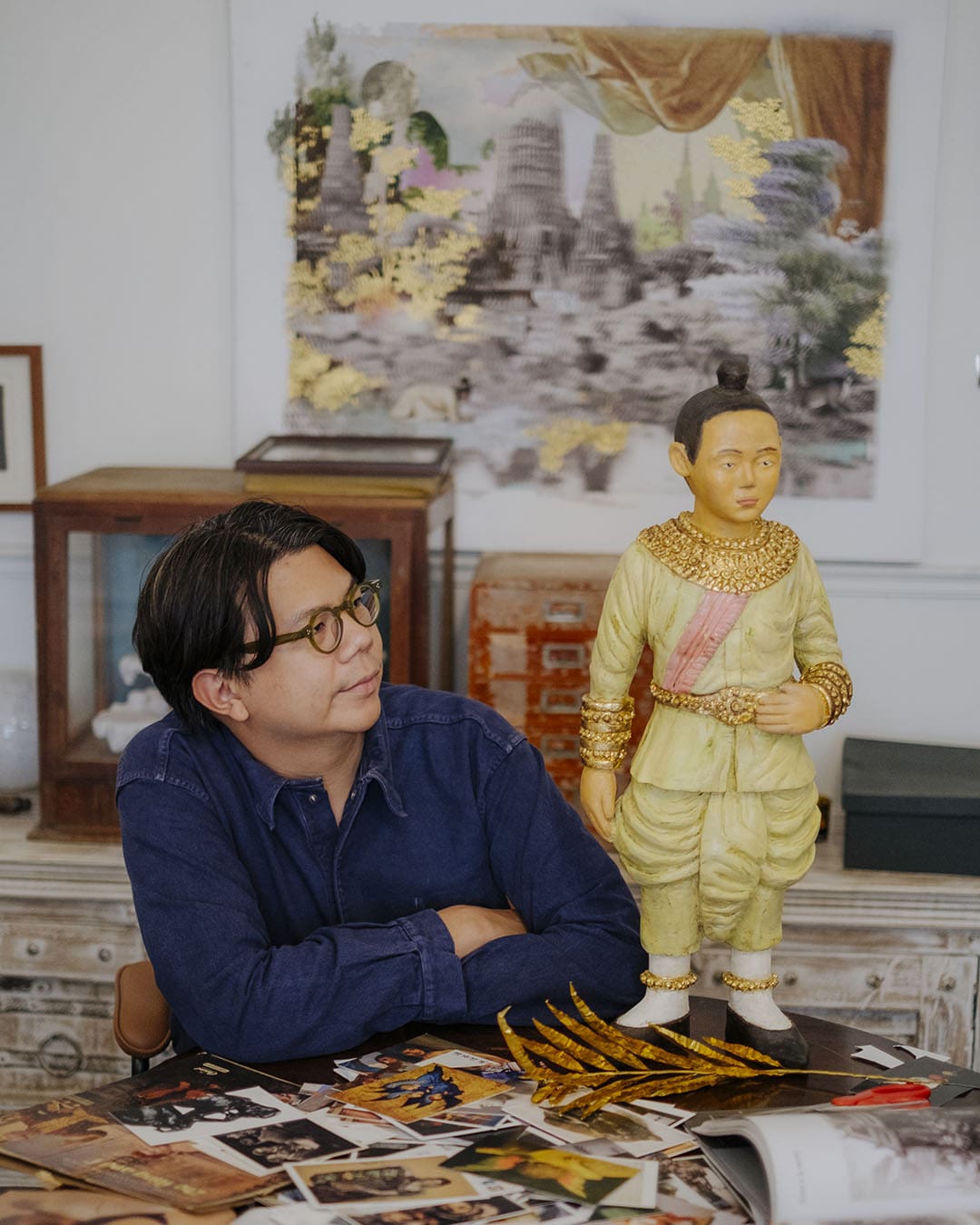
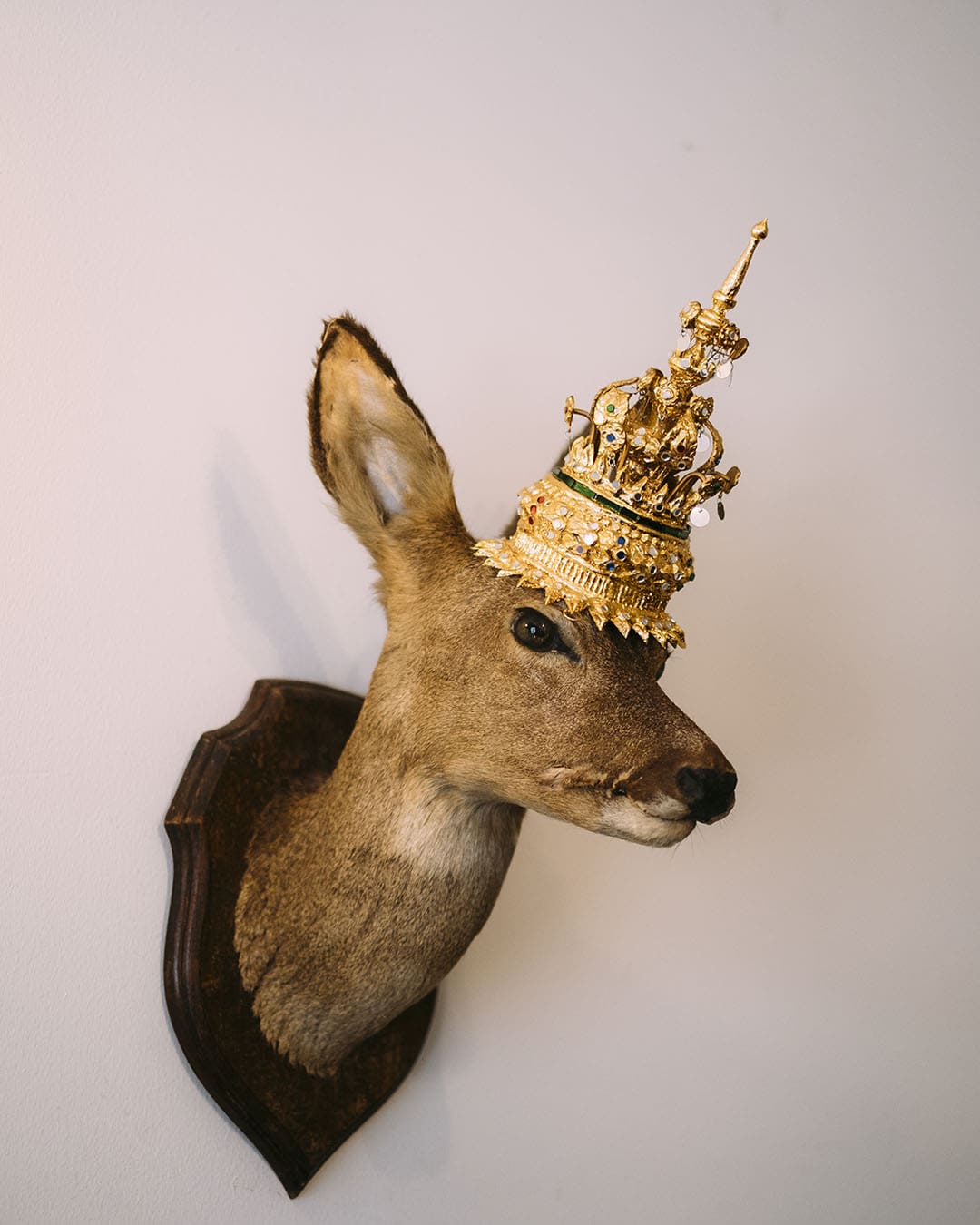
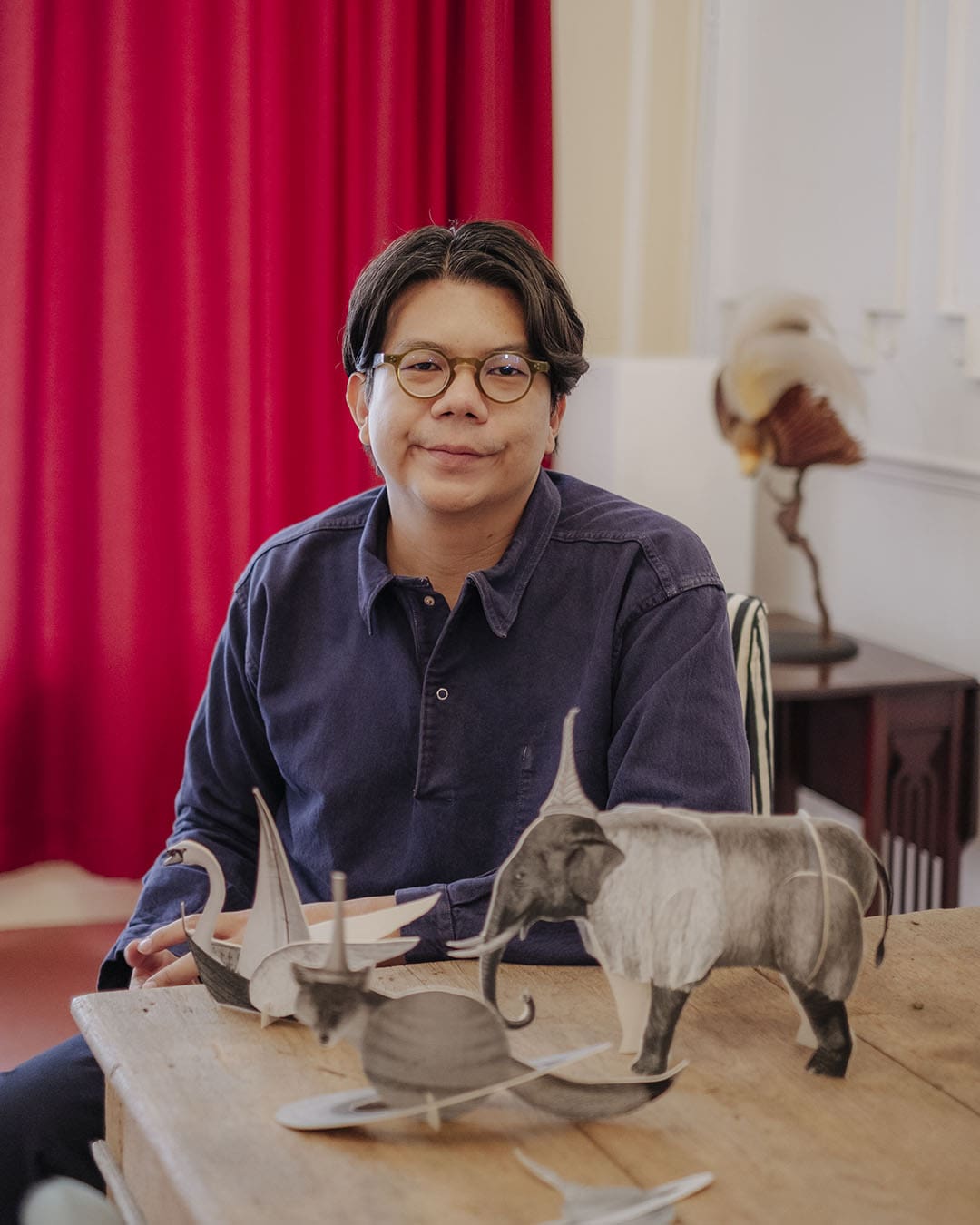
We are in Moonmanas’s studio in the city’s temple-studded Old Town, where collected artefacts, furniture and photography serve as inspiration for his surrealist mixed-media works. A decorative unicorn from New York’s MET shop is placed atop a hand-carved Thai shrine, reflective of his flair for juxtaposing East and West.
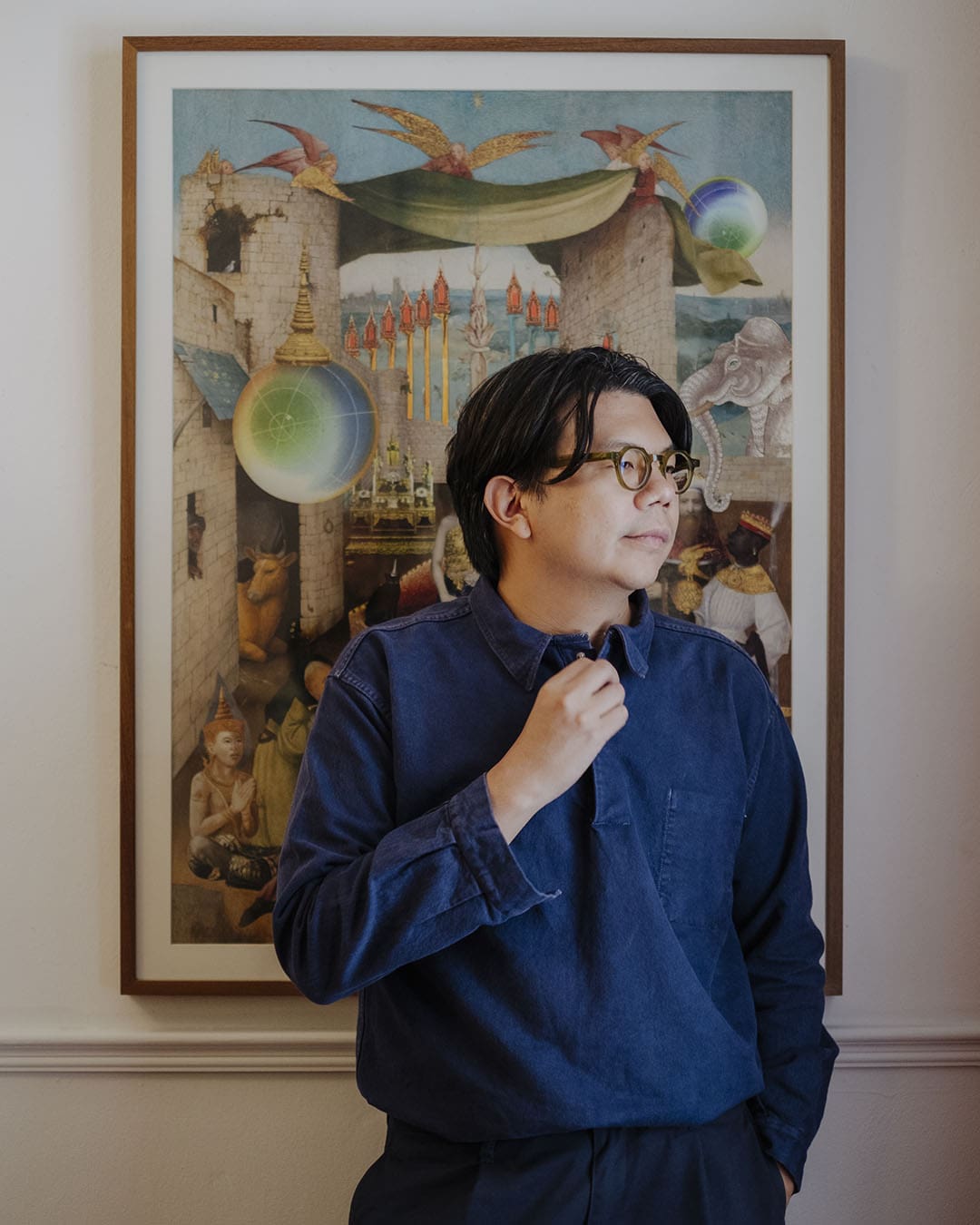
Moonmanas studied Thai literature before working as a graphic designer and illustrator. Collage combines his love of language and visual storytelling, splicing and reassembling archival and fragmented imagery, which imaginatively crosses eras and realms. Canvases playfully layer Buddhist cosmology, deities and the natural world with contemporary cultural narratives.
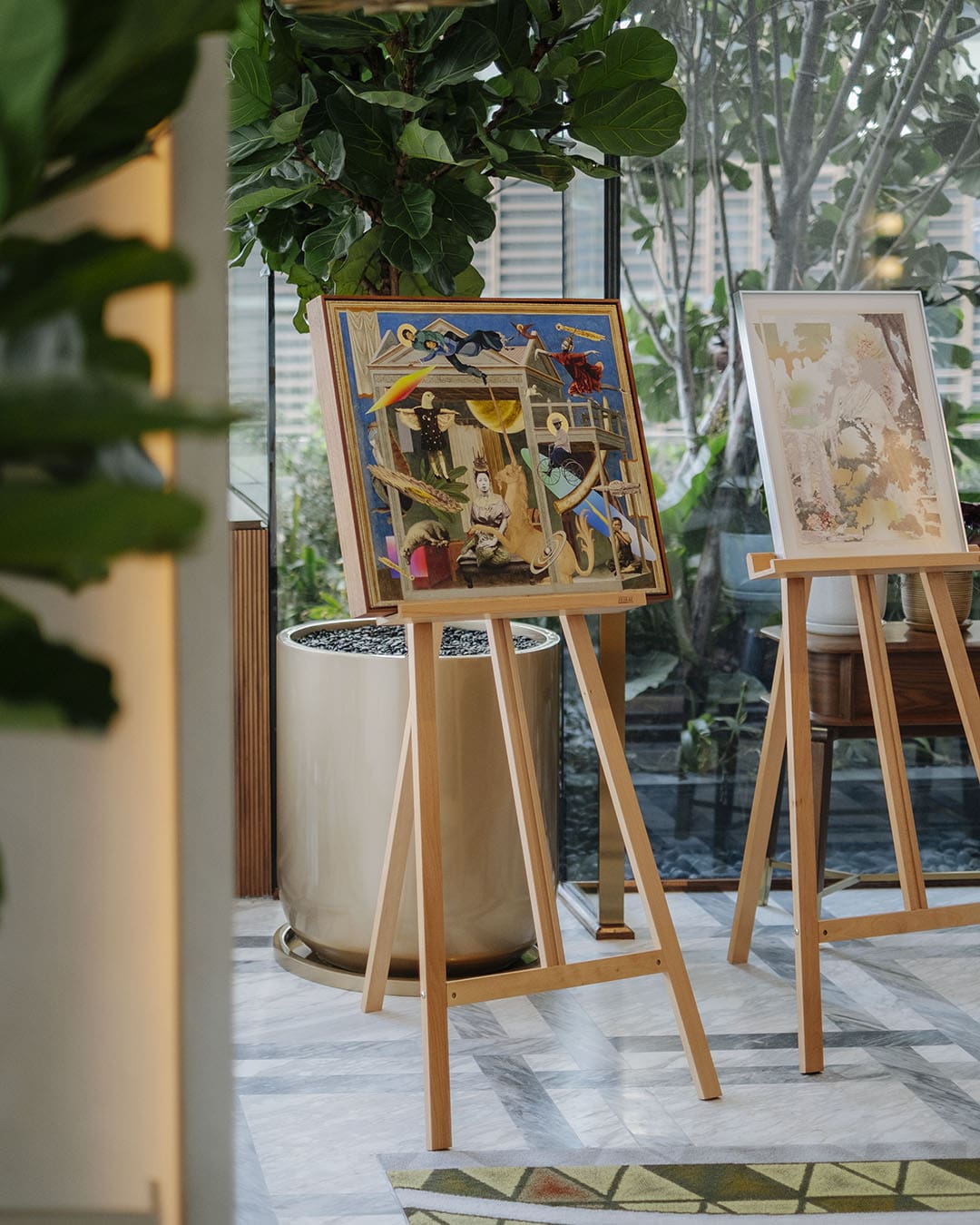
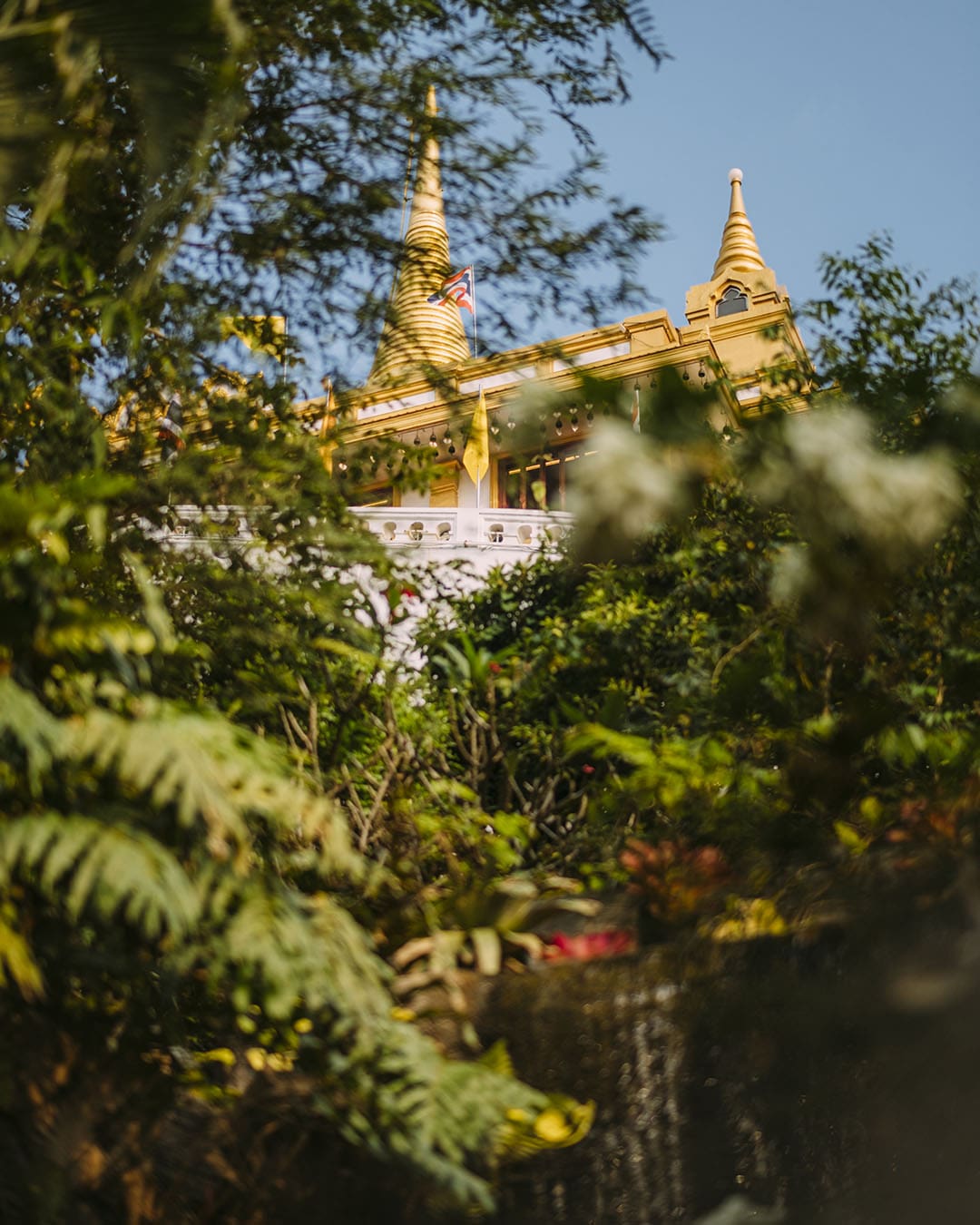
His work is on display at the new Andaz One Bangkok as part of Crafting New Perspectives, a new ongoing creative series that showcases site-specific installations at Andaz properties globally.
Moonmanas sat down with Roadbook to discuss his creative process and how Bangkok’s “chaotic, poetic, and deeply layered” spirit inspires his work.
Have you always lived in Bangkok?
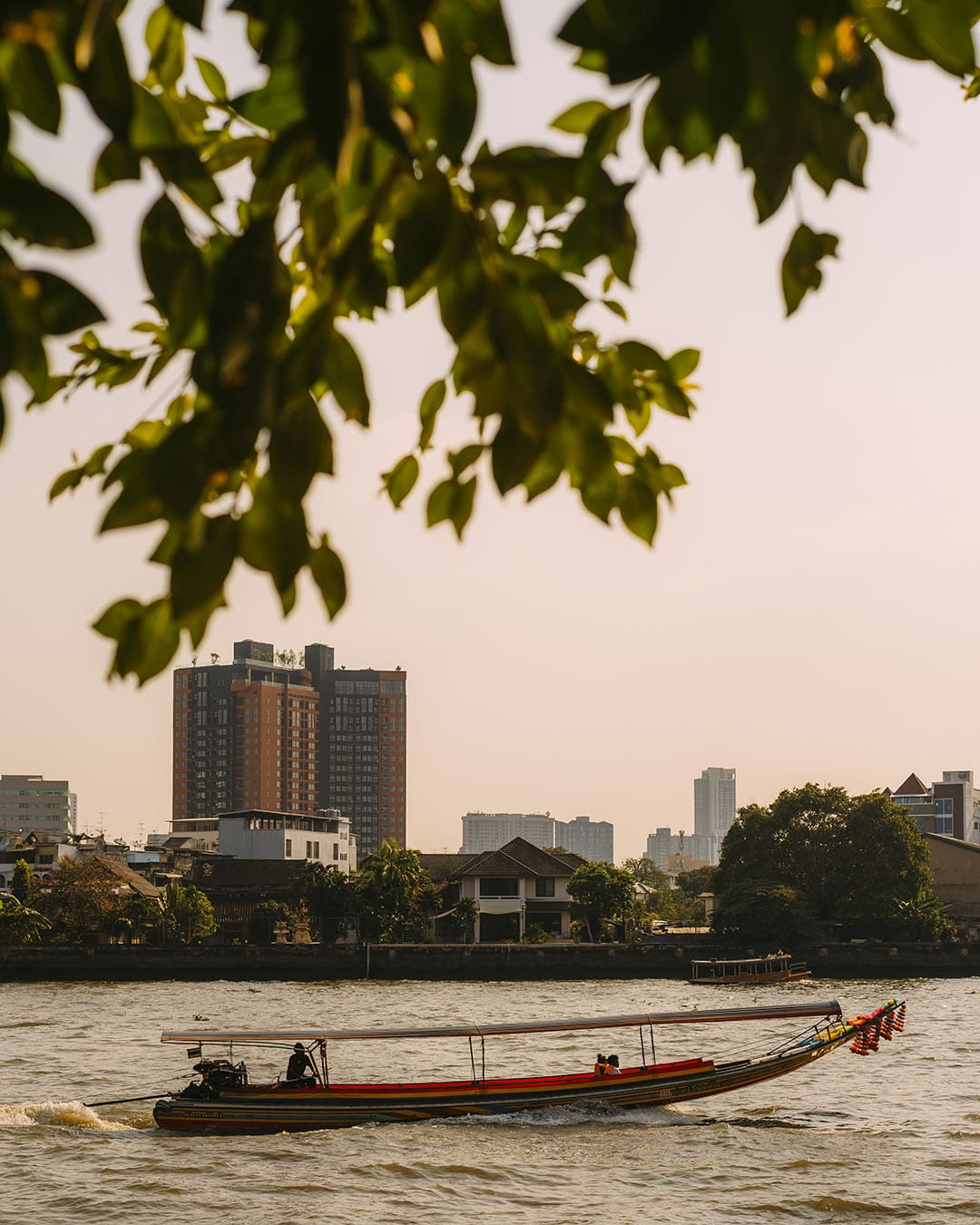
Yes, I was born and raised in Bangkok, but perhaps not the Bangkok most visitors are familiar with. I grew up and still live in Thonburi, on the western side of the Chao Phraya River. For me, this side of the city feels slower and more relaxed. It may not be as developed or convenient, but I am proud to be from here. Thonburi still has affordable local food, deep and layered histories, and even cleaner air.
What was your creative path?
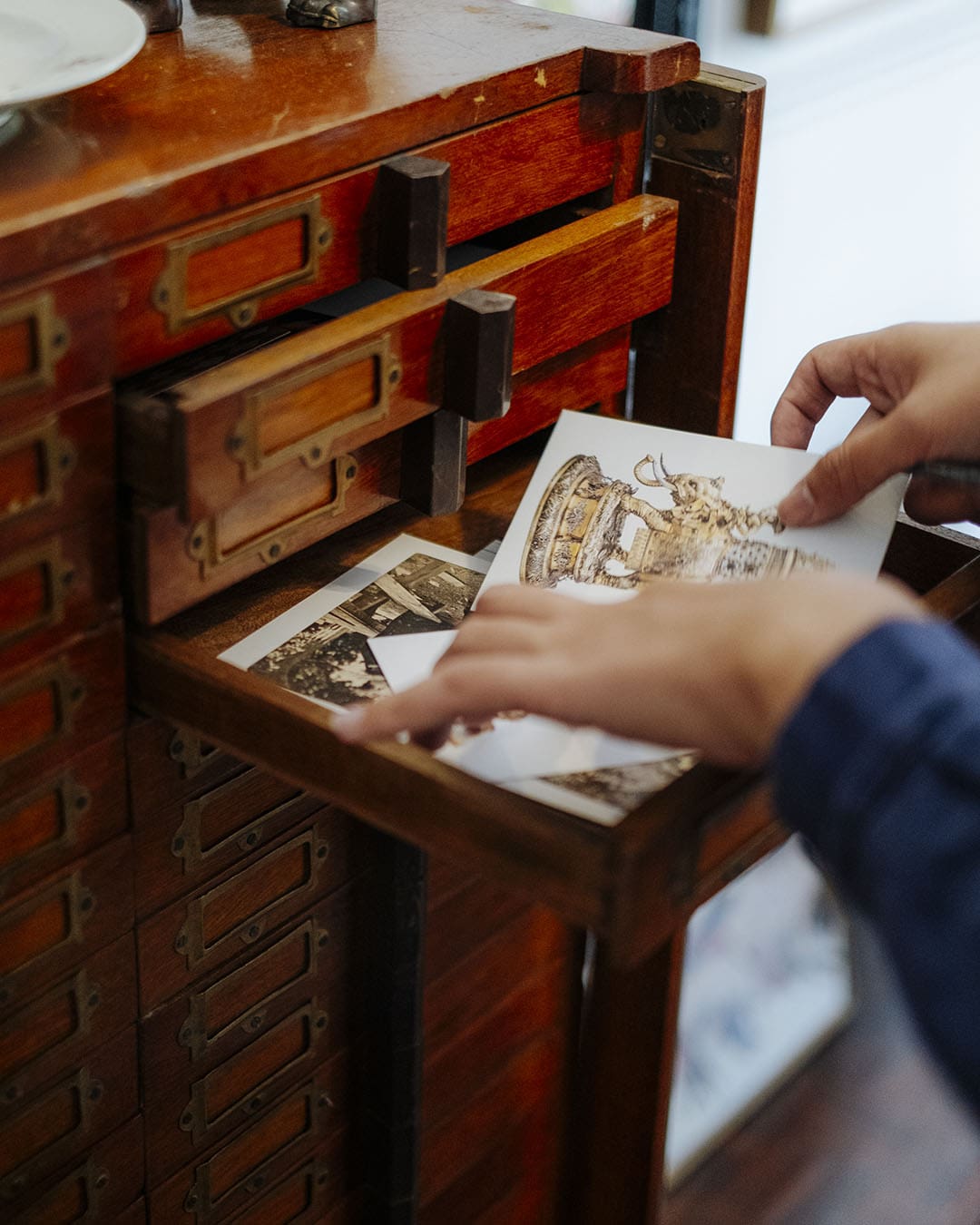
I did not graduate from an art school. I earned my bachelor’s degree in Thai language and literature at a university in Bangkok. While studying, I always felt a strong desire to make art and design. I first encountered collage when I took design courses outside my faculty. At that time, I already knew I was deeply interested in old objects, archives, and stories from the past. Collage felt intuitive. It allowed me to work with existing materials and reframe them.
I began working as a graphic designer for a fashion house in Bangkok, and later as an illustrator for publishing houses and magazines. After years of responding to briefs, I started to feel a strong urge to tell my own stories. That was when I began creating personal works, using collage as a way to share the narratives and questions that interested me most.
How do you describe your creative style?
My work is research driven but playful, existing somewhere between history and imagination. I often work with fragments, archival images, literature, and symbolic elements, then reassemble them into something slightly unfamiliar. A quiet tension between reality and fiction runs through my work.
What do you enjoy most about collage as a medium?
Collage allows contradictions to exist without needing to explain themselves. Different origins and timelines can coexist within the same space. I like how collage mirrors memory. It is fragmented, layered, and sometimes unreliable. That quality feels deeply human to me.
I began with handmade collage, then gradually moved into digital processes using graphic software. More recently, I have been expanding into sculpture, moving images, and installation. Even when the final work no longer looks like collage in a literal sense, it still informs my creative approach. I continue to bring together fragments of stories from different places and times, placing them within a shared territory to explore alternative narratives.
What recurring themes, motifs, or symbols do you use in your work?
Mount Meru appears often, as do celestial beings and deities commonly found in Thai temple murals. I often place these figures alongside Western artworks or objects, allowing different visual languages and ideological systems to exist side by side.
Are there particular Thai myths, literature, or folklore that inspire your pieces?
Thai literature and cosmology appear frequently in my work. Texts such as Traibhumikatha, written over 700 years ago, interest me not only as literary works but as entire systems of belief. They describe how people once understood the universe, nature, morality, and existence itself.
Traibhumikatha presents a Buddhist cosmology of an infinite universe, with Mount Meru, or Phra Sumeru, at its sacred centre. When Western science and astronomy later entered Siam, introducing the idea that the sun, rather than Mount Meru, was the centre of the universe, it created a profound philosophical and conceptual encounter. That moment of collision between belief systems continues to fascinate me.
What historical stories resonate with you most, which you translate into your work?
I am drawn to overlooked histories and marginal narratives, stories that sit just outside official records. Diplomatic encounters, forgotten figures, or moments when cultures collide often reveal vulnerability, power, and imagination at the same time.
One example is the story of Chakri Maha Prasat Hall, one of the most important buildings within the Grand Palace in Bangkok. Built in the 19th century, during a period when Siam was struggling to survive the pressures of Western imperialism, the building reflects a deep tension in our history. Its three storeys were designed in a Victorian Western architectural style, intended to demonstrate that Siam was as “civilised” as Western nations. However, due to objections from conservative courtiers, the original Western style roof was replaced with a traditional Thai spire, similar to those found in ancient temples and palaces. The result is a building often debated as either beautiful or awkward, appropriate or contradictory. For me, it embodies compromise, anxiety, and cultural negotiation, themes that continue to resonate today.
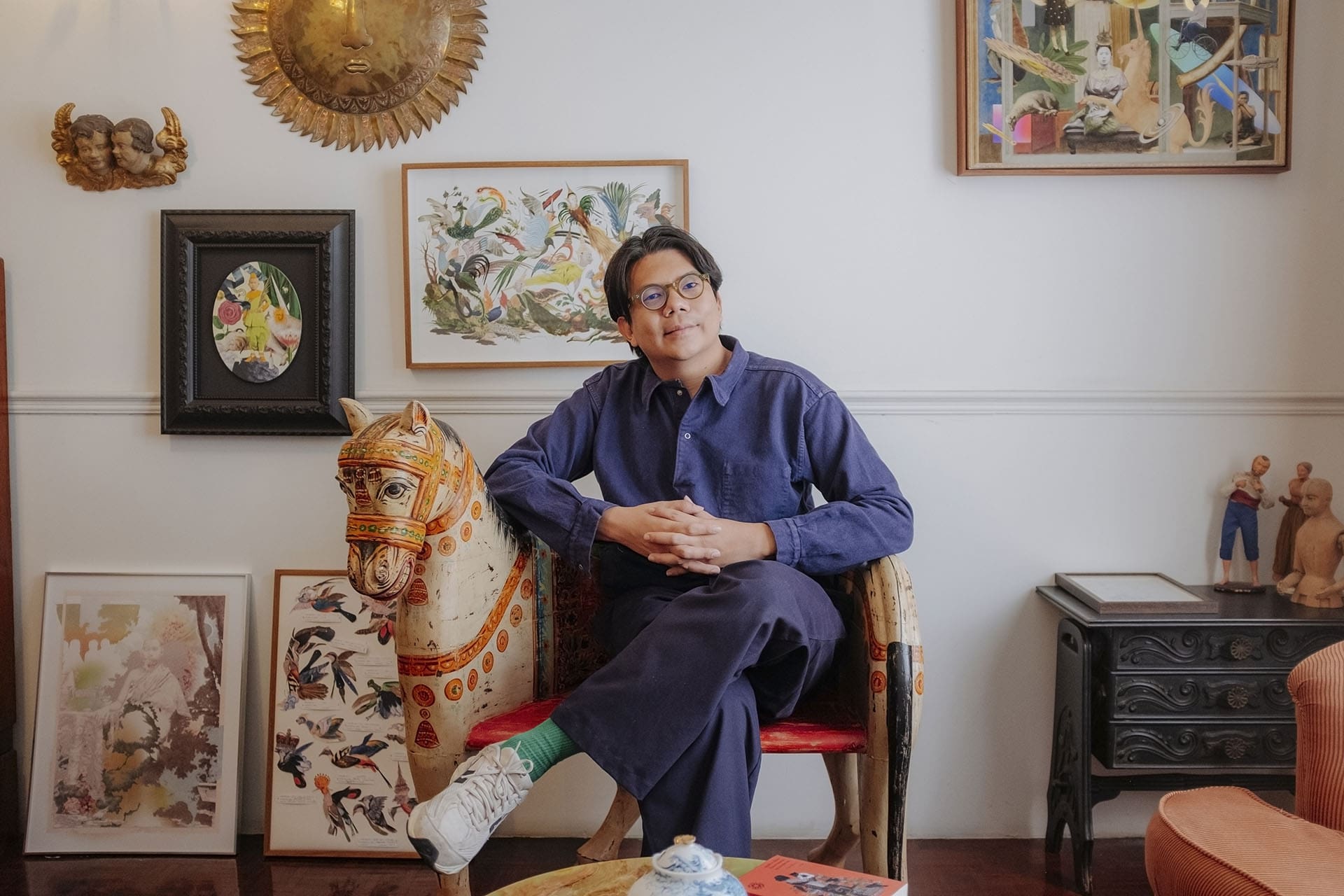
"In Bangkok, everyday life and spirituality coexist so naturally. A street food stall sits next to a shrine, and both feel equally essential.”
What is it like to live in Bangkok? What do you enjoy most about the city?
Bangkok is famous for its traffic, and living here can be intense, but it is also grounding. The city is chaotic, poetic, and deeply layered. I enjoy how everyday life and spirituality coexist so naturally. A street food stall can sit next to a shrine, and both feel equally essential.
How does the city’s energy or architecture influence your work?
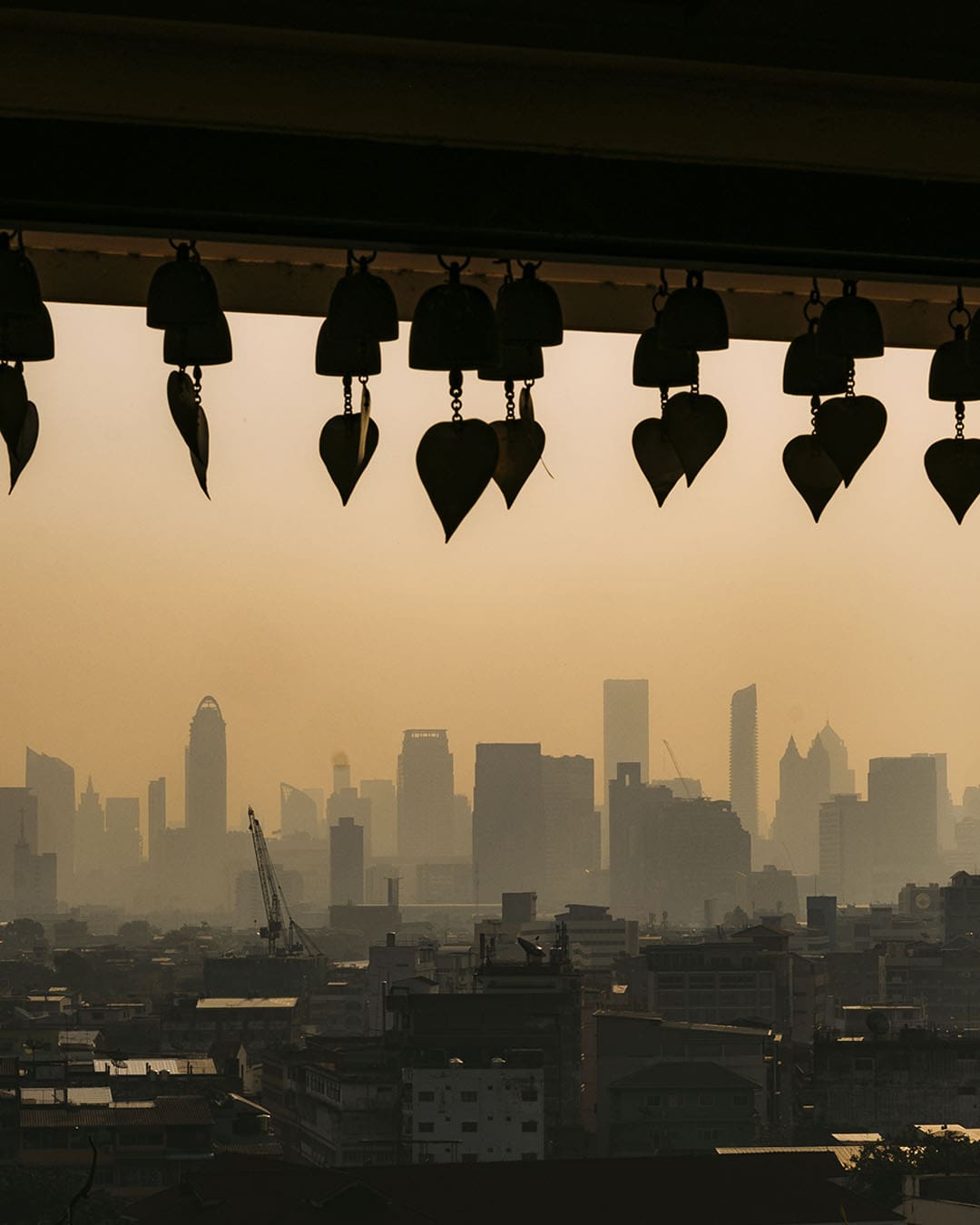
Bangkok already feels like a collage. Old buildings stand beside new ones, unfinished structures next to temples and shopping malls. That visual logic, and sometimes its lack of logic, strongly influences how I compose images. The city constantly reminds me that disorder can have its own rhythm.
What are some of your favourite places in Bangkok?
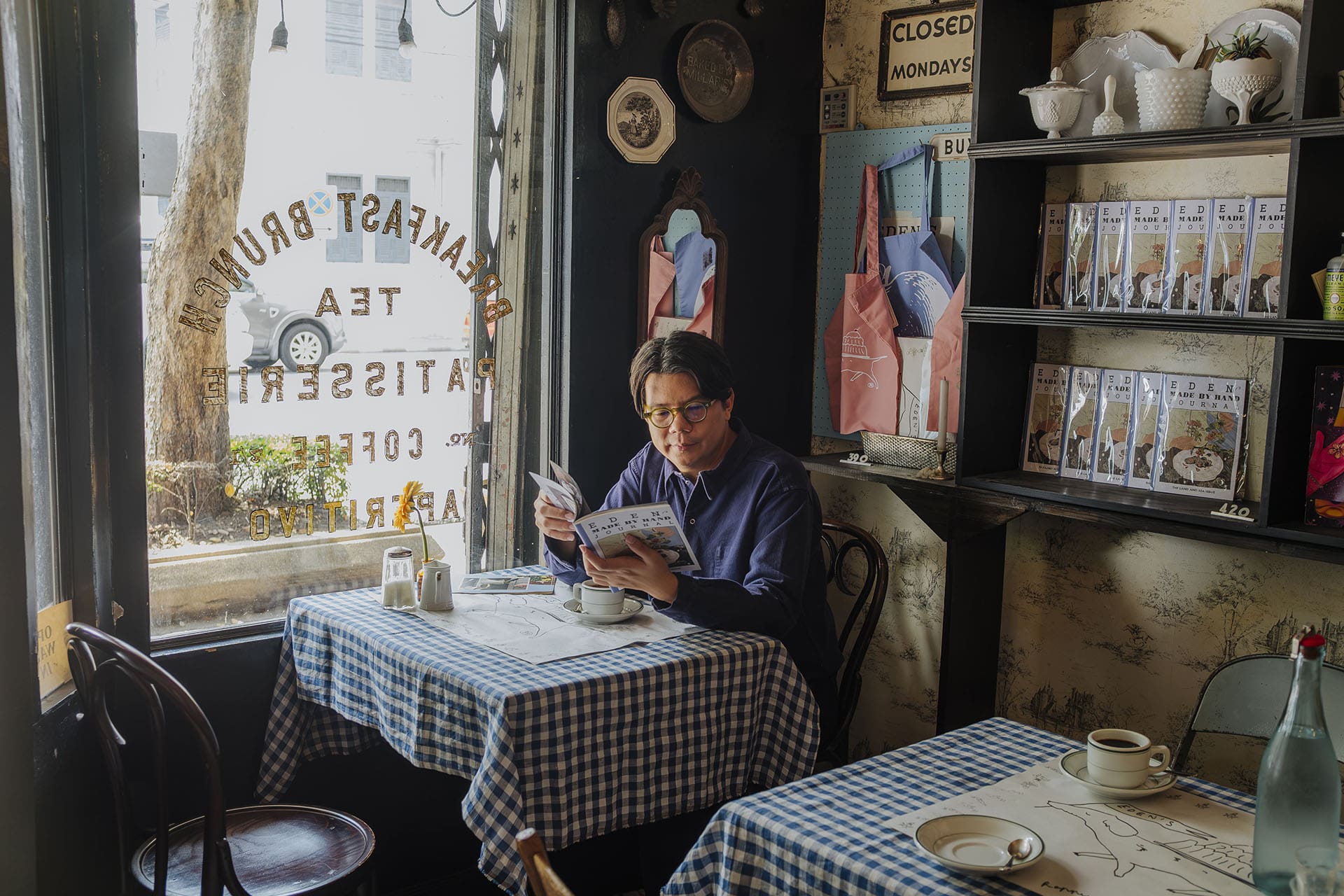
My studio is located on Lan Luang Road, in Bangkok’s Old Town. I feel grateful to be working in such a historically rich area of the city. I am surrounded by inspiring neighbours, including Eden’s café and an independent art bookshop called Vacilando. Just a short walk away is Wat Suthat Thepwararam, a temple with some of the most monumental and breathtaking mural paintings in Bangkok. It offers both quiet contemplation and constant inspiration for my work.
Have any significant trips inspired your practice?
About five years ago, I participated in an artist residency programme in Paris. The 11 months I spent there were deeply meaningful. I encountered Paris’s vibrant art scene and learned from the city’s art and history, which seem to breathe through every corner. I also researched stories of people from my country who once travelled across seas to this city of light, and later returned home to create change.
Could you envisage living anywhere else in the future?
I can imagine living elsewhere temporarily, especially in cities with rich archives and slower rhythms. There are still many places I want to visit, particularly countries and cities that hold traces of Thai memory, or where history, myth, and contemporary life strongly overlap. But Bangkok will always be part of me.
At Andaz hotels and resorts, global travel is inspired by local culture. Use code ROADBOOK to save 15 per cent on stays booked and taken before 31 December 2026. hyatt.com/andaz


