
Beirut architect Carl Gerges on building a future in Lebanon
Lebanese musician and architect Carl Gerges reflects on the pull of home, the power of design, and creating against the odds in a vibrant and shifting city that breaks often, but still carries on.
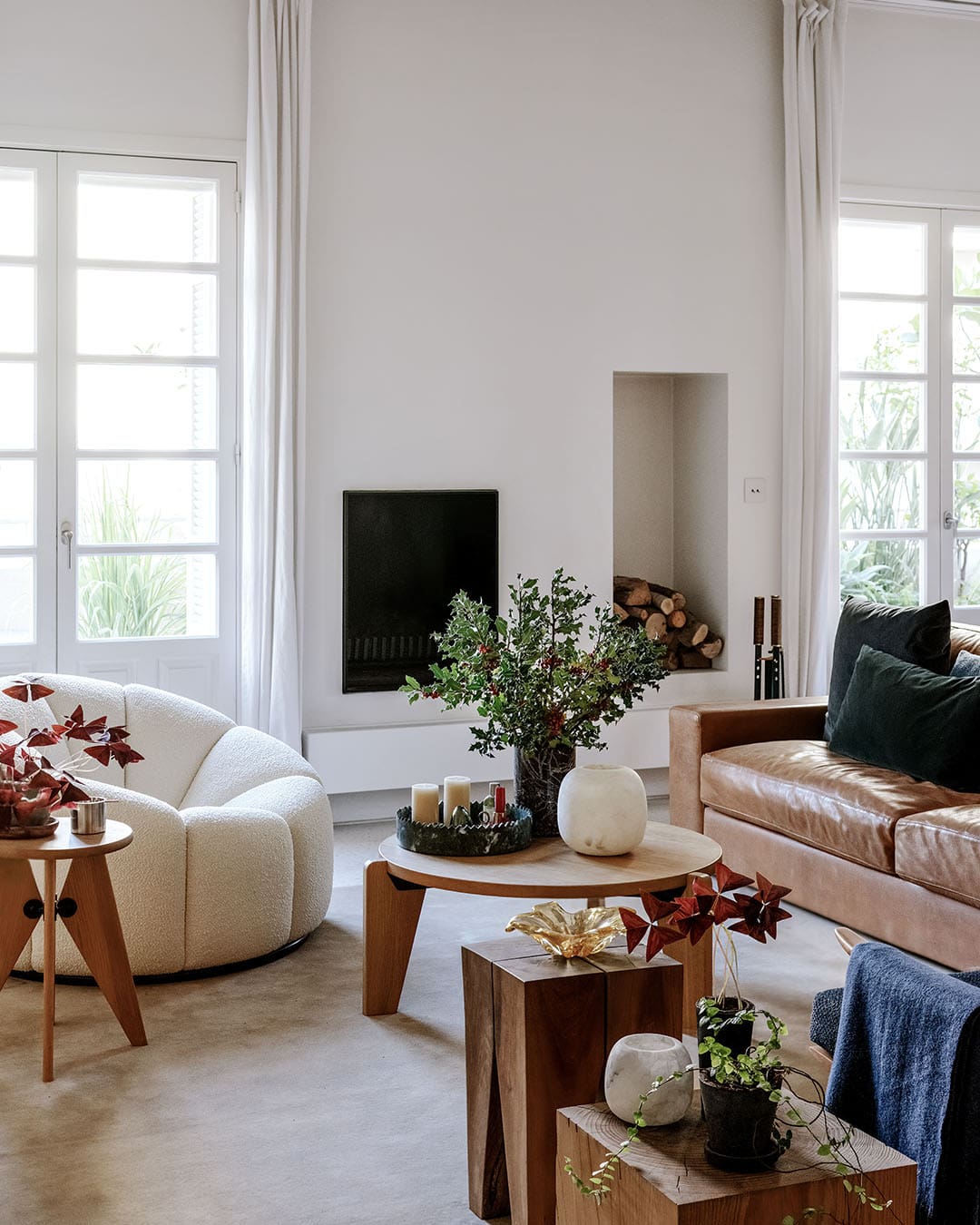
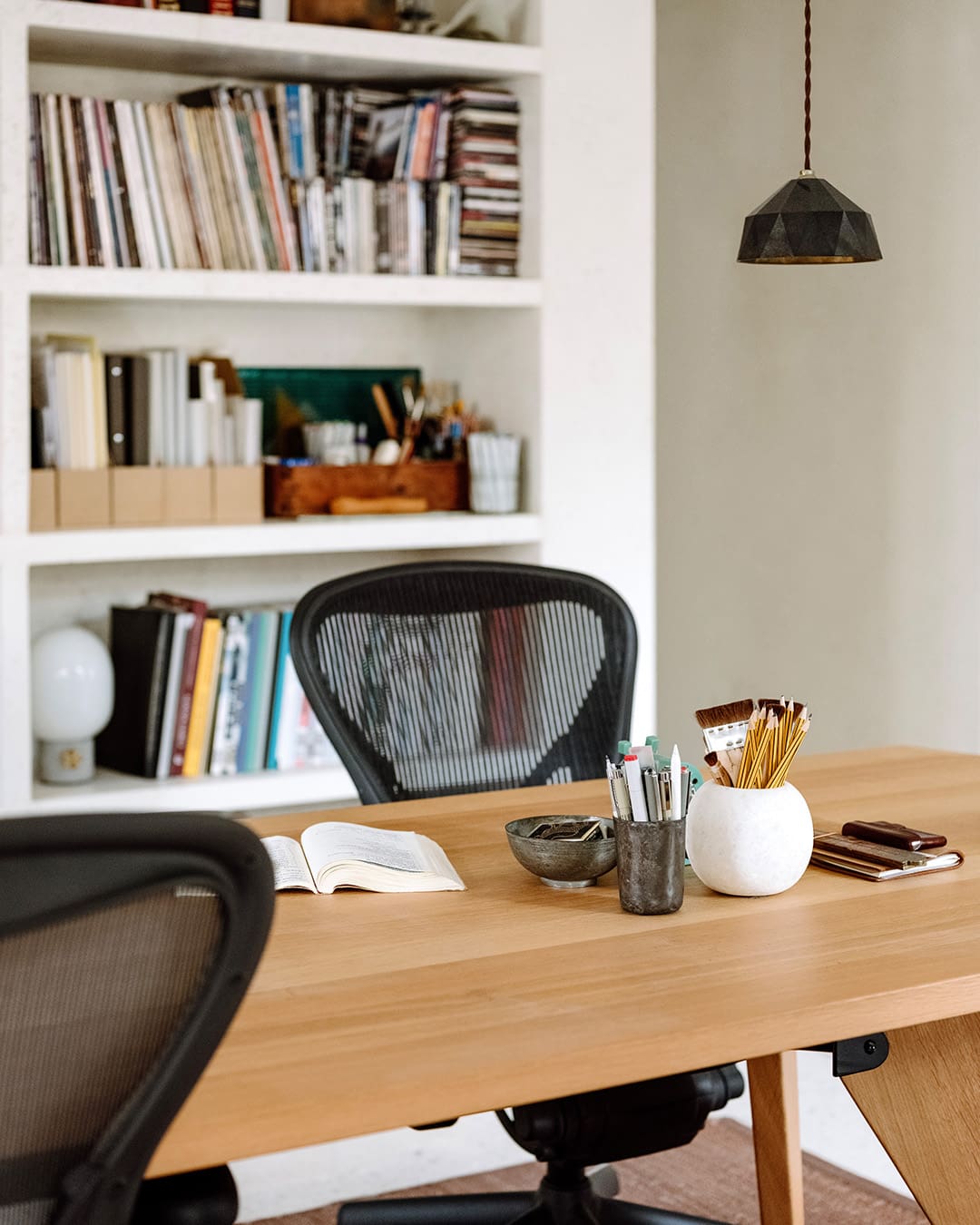
Stepping into Carl Gerges’ fifth floor studio in Ashrafieh, Beirut, is like entering a peaceful sanctuary, high above the city. Gerges sensitively restored an abandoned Art Deco building to create a warm, modern space, which is reflective of his practice. Light pours through tall windows, while clean lines and precise proportions are softened by organic shapes and leafy plants, bringing nature indoors.
Gerges garnered acclaim as the drummer of Mashrou’ Leila, the Lebanese band that reshaped Arab indie music. The group met while studying architecture at the American University of Beirut and when they disbanded in 2020, Gerges launched his eponymous architectural studio, which carries the same charisma he once embodied on stage.
From his studio, Gerges reflects on his creative journey, from touring the world to living and working through the Lebanese war, and the role of design in shaping Beirut’s cultural and physical renewal.
You’ve had an unconventional path, balancing architecture and music. How did it all begin?
It’s funny how life never really goes as planned. I studied civil engineering at the American University of Beirut because my parents wanted me to become a “mhandis”, which is an Arabic term for both architect and civil engineer, and I didn’t recognise the distinction between the two. I realised on my first day, however, that I had made a mistake and wanted to transfer to the more creative aspect of building. I spent a year studying math and physics, watching my architecture friends carry models and drawings, and envying them; they looked cool and creative, while we were stressed about numbers and equations.
Eventually, a friend and I went to the architecture department with a proposal: we would design a project alongside their students, and if we scored high enough, they would take us. We presented loop our work, scored above 90, and that was the turning point.
Then the 2006 war happened, the university closed, and everything was on hold. When it reopened, I went straight to architecture school, where I met my bandmates. We started Mashrou’ Leila that same year, and soon after we were touring the world.
How long did it take for the band to take off?
About a year. We were young and incredibly lucky to have understanding professors. Architecture demands full dedication, but they allowed me to travel and skip presentations because they saw our passion. They were proud.
Your studio is one of the most striking spaces in Beirut: minimal, warm and serene, housed inside an Art Deco building. How did you create it?
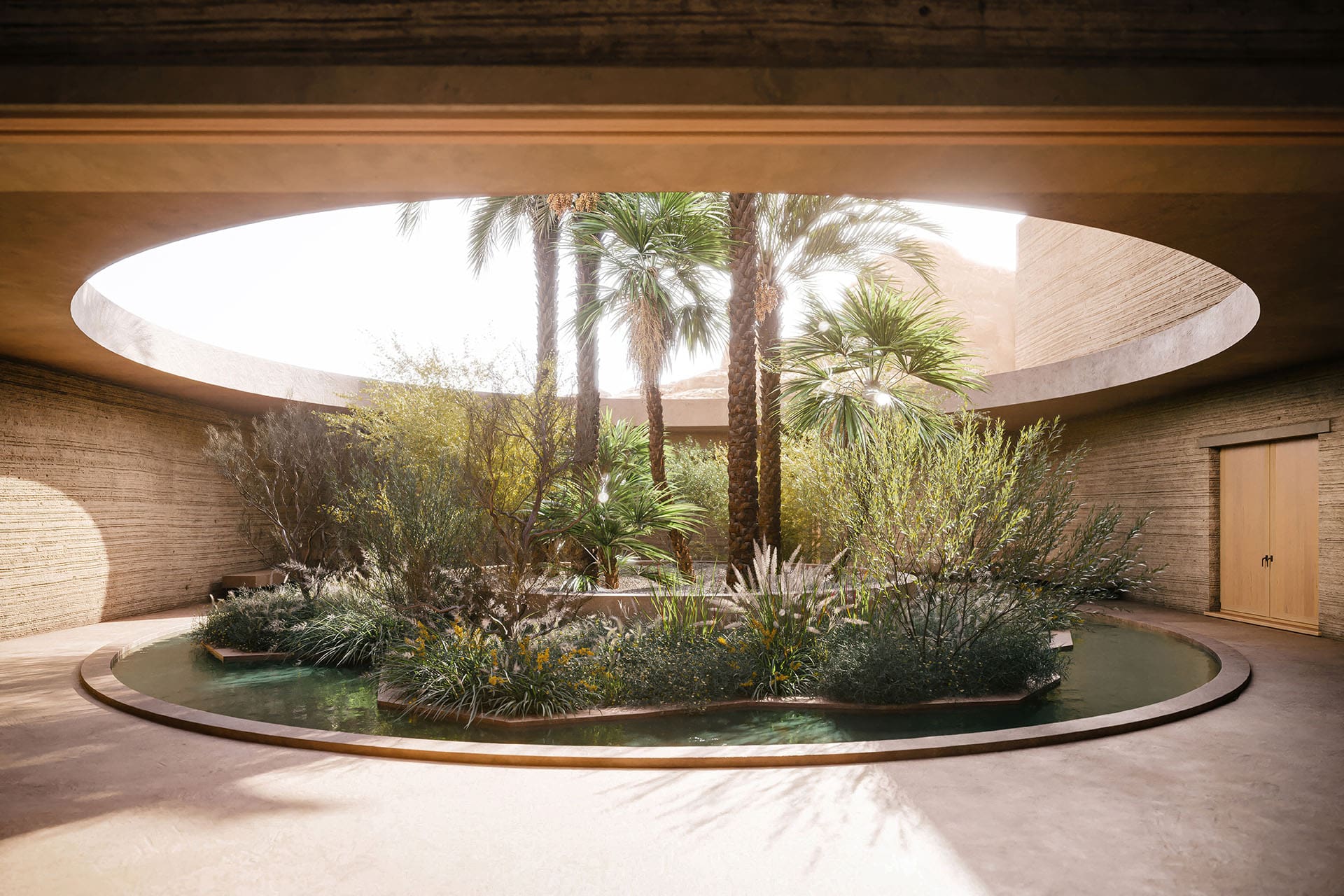
It is one of the few Art Deco buildings still standing in Beirut. It was completely destroyed when I bought it; there were holes in the walls from the war, no windows, pigeons everywhere. Everyone thought I was crazy, but I saw potential. I restored it slowly, step by step. It took almost four years to bring it back to life.
There is no elevator, so I climb five flights every day, but the light and the silence make it worth it. I wanted a space that felt peaceful and personal, a quiet refuge above the city. I furnished it gradually with pieces collected from my travels.
I have always believed that if you do something from the start, you should do it with the best quality possible so that it lasts. Everything in this apartment reflects that belief.
What are some of your favourite design pieces?
The couch. It did not cost much to make and people think it is vintage, but I had it made here in Beirut 12 years ago. I also have old stools from AUB’s architecture school that were being thrown away. I took them and they matched the he
"We worked with the sound of drones, explosions, and sirens, but we kept going. Designing here feels like an act of resistance."

You stayed in Beirut through the 2024 war, when many people left. What was that experience like?
I have had many chances to leave, after the explosion and during the crisis, but I always chose to stay. I feel most myself in Beirut, even when it is at its most unstable. My family, friends and team are all here. Leaving has never felt like an option.
Hardship brings people closer, and part of living and creating here is learning to endure. We worked some nights with the sound of drones, explosions, and sirens, but we kept going. It was terrifying, but also strangely unifying. Designing in that environment felt like an act of resistance, a way to prove that life goes on.
For me, architecture is not only about buildings. It is about presence and persistence. It is a way of saying that we still believe in this place. Lebanon continues to hold its charm and potential if people choose to nurture it, like some of my very brave clients and initiatives like WeDesign Beirut.
Speaking of, can we talk about the monumental piece you just presented at We Design Beirut?
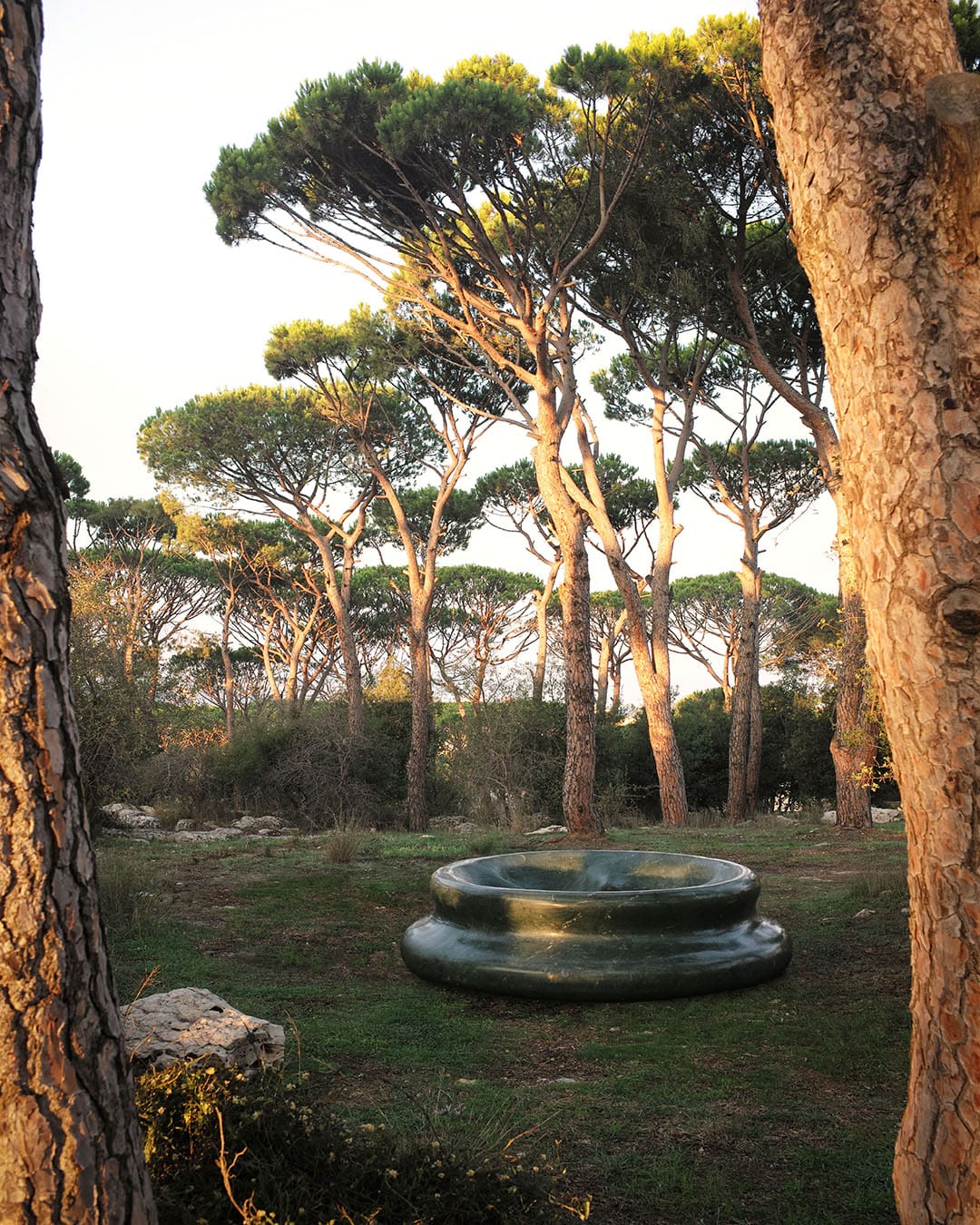
When Mariana (Wehbe, founder of We Design Beirut) approached me, I was very excited to contribute to the revival of the city’s iconic Roman bath ruins. It’s a site that’s been inaccessible for years due to its proximity to the parliament, which was closed to the public during the revolution of 2019. I wanted to create something inspired by the ritual of bathing, that was ergonomic and retained heat. We worked with a massive slab of marble – which took a crane to move – and carved it so that the bath sits in its negative space. It was a pure luxurious fantasy, and in a way, very Beirut.
For someone who has never been, how would you describe Beirut?
Architecturally, it is a mix of everything. Nineteenth century and Art Deco buildings alongside glass towers from the 2000s (the worst era, in my opinion). Some of my favourite buildings are from the 1960s and ‘70s. Maybe they don’t complement each other visually, but they coexist in a way that feels natural, and that adds dimension to the city. It is layered, rich, and full of contradictions.
Geographically, it is very interesting because the mountains look like they’re cascading straight into the sea. I love hiking and exploring the wilderness; the nature is so beautiful and diverse, with a completely different landscape less than an hour from the city.
Looking at recent architectural projects, it feels like you are helping shape the hospitality scene with a fresh vision. How do you see the country’s revival?
I have been lucky to work on projects that are open to everyone: restaurants, hotels, clubs – places where people come together. It is rewarding because you can see how people interact with the space. When you design a private house, it is for a few people. But when you create something public, it becomes part of the city.
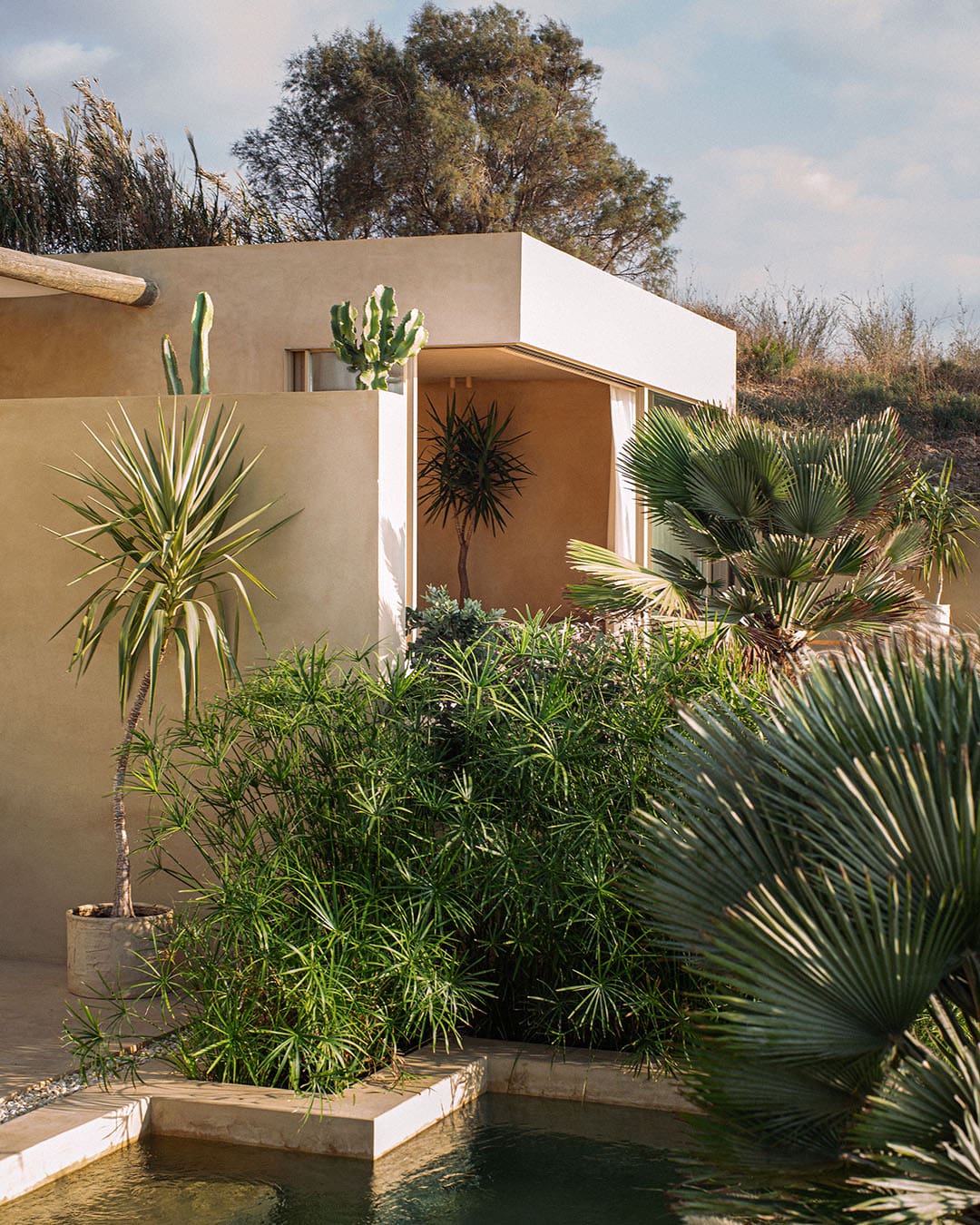
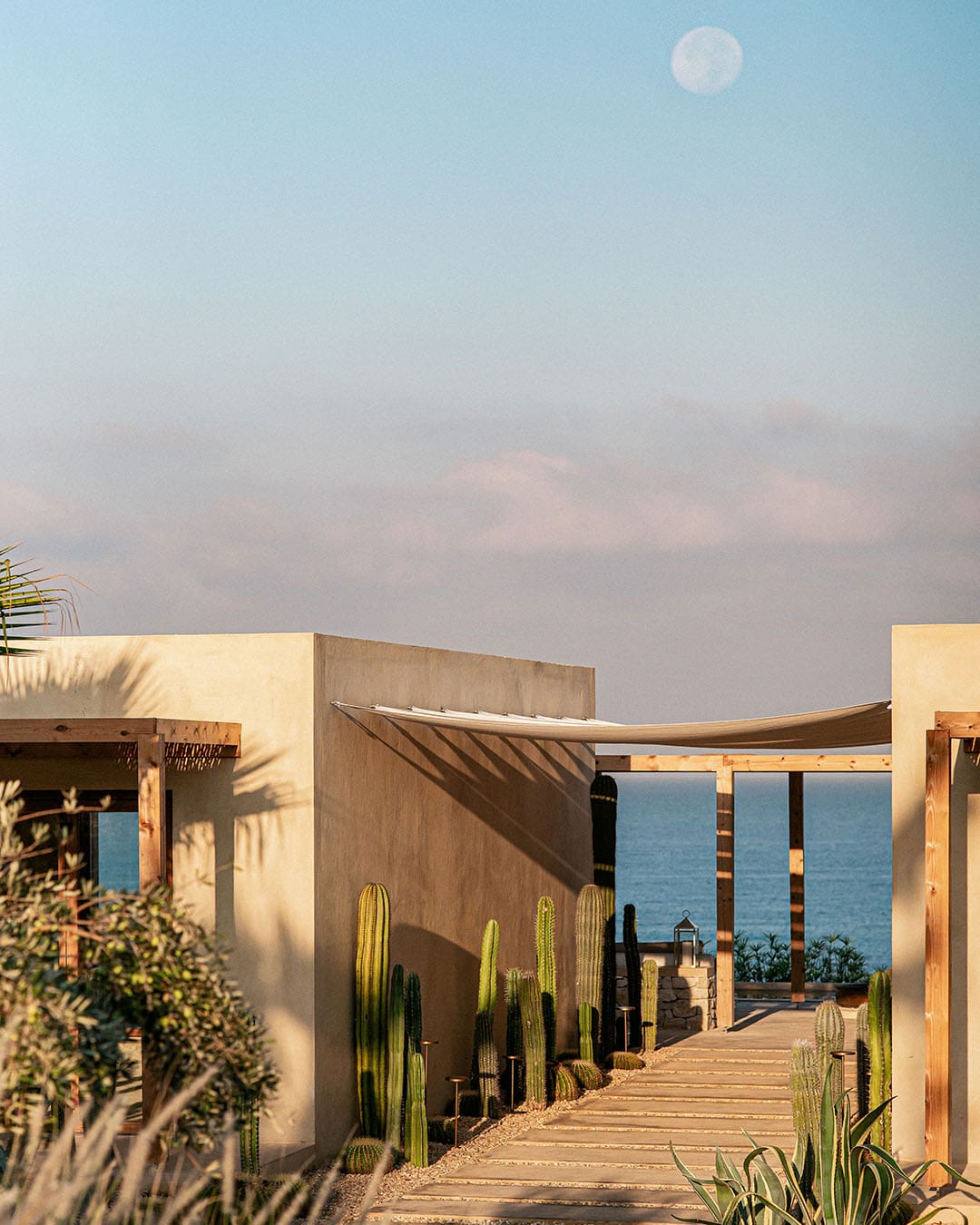
I designed Capo (a seaside hotel resort in the coastal city of Batroun), AHM (Beirut’s quintessential nightclub) and Clubroom (Beirut’s first real speakeasy) during very difficult times. We were working through the pandemic, the financial collapse, and the war. For me, working on these projects felt like contributing to the country’s revival.

What guides your approach to design?
When I start a project, I always look at the land, the light, and the surroundings. The site shapes the building, not the other way around.
I have always been close to nature. My grandfather had a big garden, and I grew up gardening with him. That is where my love for the outdoors started.
Sustainability, for me, is logical. When you dig and find rocks, use them; do not throw them away and buy new materials. Reuse what is there. It saves time, money, and connects the building to its place.
You often speak about the link between architecture and music. How do they influence each other?
They have always lived together for me. When we toured with the band, we did not spend our time partying. We visited museums, galleries, and buildings in every city. That changed the way I see design. It opened my eyes to scale, rhythm and composition. When I design a space, I see it like a stage. It becomes cinematic and layered, and you do not reveal everything at once.


What are you listening to these days?
Honestly, everything. I listen to classical music, rock, pop, and even K pop, which is very addictive. Recently I discovered Charif Megarbane and I really like his music. I have been listening to the new Tame Impala album, and a lot of old school R&B (Destiny’s Child, D’angelo). And I love regional artists like Elyanna, Saint Levant and Zeyne.
Are there any buildings or places in Lebanon that inspire you?
There is a church in Yarze designed by Jacques Liger Belair. It is a concrete shell in the middle of the forest, and the light inside is amazing. Nature has taken over some parts, which makes it even more peaceful. I go there whenever I need to clear my mind. Another place I love is the Tripoli Fair by Oscar Niemeyer. It is a huge project that was never opened and it feels frozen in time. I also enjoy familiar places, like Sporting Club Beach, and the AUB campus, home to the only botanical garden in the city.
What do you recommend to somebody visiting Beirut for the first time?
I love Casablanca for lunch, it is timeless and is one of few restaurants that overlooks the sea. The vibe is relaxed and it feels like old Beirut. For bars, I like Clubroom, which I designed; It is better to go early before it gets crowded and smoky. It is nice for a drink or a date. Centrale is another place I love, which was designed by Bernard Khoury and it has a very elegant, dark atmosphere that has not changed in years.
For coffee, I usually go to Ginette. It’s a concept store with a lot of history and it survived everything this city has been through. I love Odette, a small Taqueria in Ashrafieh whose owner is a friend and super hands on; the passion is evident.
For art I really like the Sursock Museum, it is one of the most beautiful buildings in Beirut. The National Museum is also underrated: they have a commitment to preserving their artifacts that’s admirable. During the war they encased the statues in concrete to protect them, and I think that’s an analogy that encapsulates Beirut’s spirit.


