My City: Milan
A native writer reflects on the city she calls home, where hidden courtyards lead to thriving creative studios, style pours out of each piazza, and coffee culture is sacrosanct
To understand Milan, you first have to understand the way we walk: with a purposeful, caffeinated velocity that suggests a ten-million-euro deal is just around the corner. Our energy moves in step with a city quietly reinvented itself.
Oh, Milan, my lovely Milan. Since the 2015 Expo exploded, this city, once dismissed as the “gray epicenter” of stiff finance, has undergone a metamorphosis. As a born-and-bred Milanese returning after years in London, I have found a creatively-charged, flourishing city, where design, fashion and art converge.
Milan is tiny; it lacks the theatrical ruins of Rome or the sun-drenched romance of the coast. Yet it is mysterious and electric, a city of “closed doors” where beauty is an interior affair. Look closely and you’ll discover its soul, concealed behind heavy neoclassical portals and hidden marble courtyards.


To live here is to adapt to the whims of the Milanese, a rare, hardworking, and often harsh breed. We are still anchored by the Sciuras, those impeccably groomed old ladies parading their silks and feathers around Montenapoleone like a flock of formidable birds. They are the guardians of a style that is uniquely, fiercely Milanese: clean, elegant, yet deeply eclectic. Think of Miuccia Prada’s intellectual subversion or the artful clashing of Marni; this is a city where “ugly-chic” was practically invented. It’s a uniform of heavy wools, perfectly tailored trousers, and vintage jewels that suggest a quiet, inherited power.
The city’s aesthetic is no longer a closed circuit, however. Today’s Milan is defined by a high-stakes collision of expats and locals working across fashion, architecture, and art. This cross-pollination has added new zest to the mix, shifting the hospitality landscape toward an era of understated glamour marked by the arrival of Cipriani, The Wilde, and the bated-breath anticipation of Soho House.
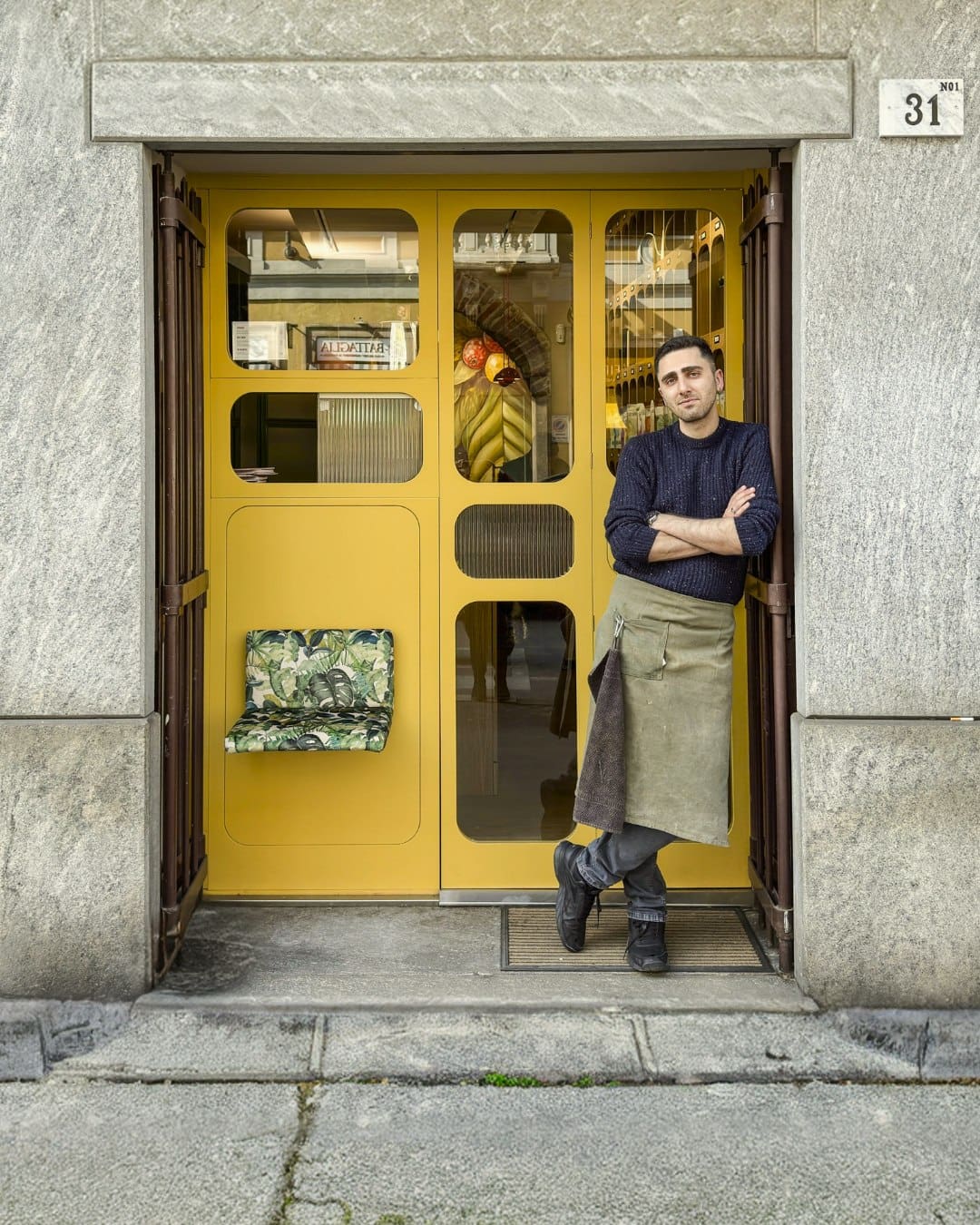
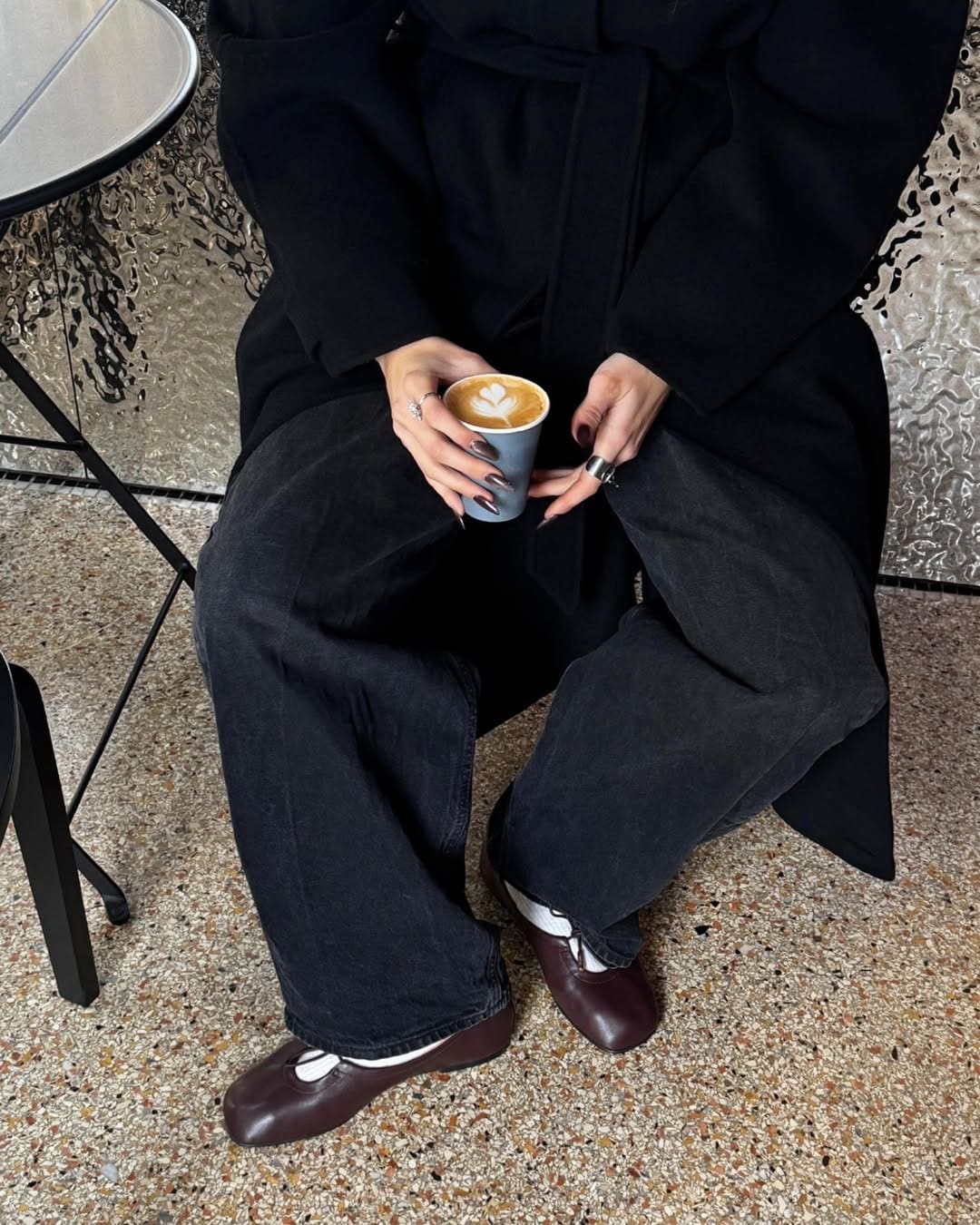
"The city’s everyday rituals remain sacred"
The real magic is in how the city’s fabric stretches and relaxes. We used to know Milan through its rigid main pillars: the cobblestones of Brera and the Fashion Quadrilatero, the queer, vibrant pulse of Porta Venezia, and the residential elegance of Porta Romana, together with the distinct identities of up-and-coming residential neighbourhoods. Boundaries have since softened, and these areas now bleed into one another, transforming former industrial fringes into cultural magnets.
I’ve felt this shift firsthand in my own neighborhood, Acquabella/Città Studi. Historically a quiet enclave for families and students from the Politecnico, it has recently pivoted. Ever since the fashion brand Sunnei moved its creative offices behind my apartment, a new wave of creatives has moved in, opening studios and little restaurants that sit comfortably alongside the old guard.
Despite the glitz, the city’s everyday rituals remain sacred. The day starts with a caffè al banco, the standing coffee. It’s a 90-second performance: the clink of the saucer, two sips, and you’re gone. Sometimes on weekends, I indulge in a slower version, drinking my coffee while people-watching at Bar Pasticceria Nuova Milano, a legendary “posto sincero” with no Instagram and the best croissants in town. It was once the haunt of the Milanese avant-garde, Battiato and Loredana Bertè, and it remains a rival to many other iconic Pasticcerie.

This “remix” extends to our aperitivo-led evenings as well. My friends spearheaded the natural wine movement here with Palinurobar, paving the way for spots like Bar Nico, Bar Paradiso, Section80 Bar, and Ultramarino. These aren’t just bars; they are gathering spaces where “cool Milanese kids” serve local plates at the intersection of fashion and the arts. Whether it’s a listening session at Palinuro or a classic Negroni Sbagliato at Bar Basso, the ritual is the same: stay outside, stand up, and own the space.
The city’s food scene has moved beyond the traditional risotto. An incredible culinary boom is vibrating through neighborhoods like Risorgimento and Città Studi, where food studios and experimental bistros like Sandì, Fiorin Fiorello Fiore, or Sidewalk Kitchens are popping up. Here, neighbourhood character isn’t preserved like a museum, but remixed through proximity.


"In Milan, design isn't a hobby; it’s our civic religion."
In Milan, design isn’t a hobby; it’s our civic religion. We are anchored by icons: the Triennale acts as our design conscience, while the Fondazione Prada has redefined the southern skyline, turning an old distillery into a gold-leafed temple of contemporary thought. From the classicism of the GAM to the radical archives of fashion houses, the built environment is a dialogue between the heavy wool coats of the past and the sleek glass of the future.
This “high-definition” identity is pushing against the vintage-filter clichés often used to define Italy. A new generation is embracing a hybrid, hyper-aware reality, one that is as much about the digital scroll of a magazine as it is about the cobblestones of Brera. The creative friction of old and new is exemplified in places like DOPO?, a dynamic cultural space where researchers, architects and designers meet.


Yet, the most Milanese rhythm of all is the “great escape.” We work with a Teutonic intensity so that we can disappear the moment the clock strikes seven. Come the weekend of Sant’Ambroeus, or any other weekend during spring, the city effectively hollows out. We flock to the sea at Camogli or the snow-capped peaks of Courmayeur. We need the blue of the Mediterranean, a day spent hiking on nearby Alps, or a short train ride to Palazzo Monti in Brescia to offset the gray pavement we pound all week.
For the first-time visitor: look up and look in. Peer into the entryways of the great palazzos. Catch an arthouse film at the red velvet-clad Cinema Beltrade. Visit Wait and See, Uberta Zambeletti’s maximalist wunderkammer, or browse the vintage at Cavalli e Nastri. Walk with purpose; even if you’re lost, dress and act the part.