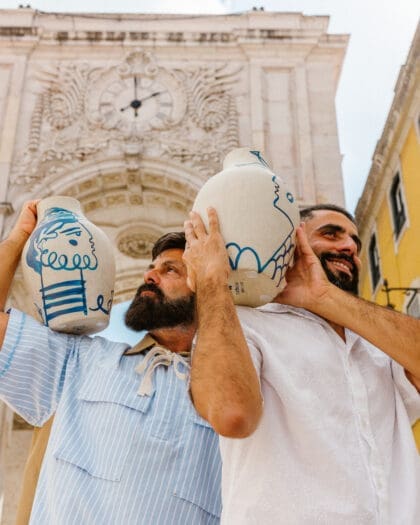
Oficina Marques playfully reworks Lisbon’s past by hand
Multidisciplinary studio Oficina Marques explores Lisbon’s maritime heritage through bold geometric forms and hand-built vases. They discuss their creative practice and the future of the city’s craft culture.
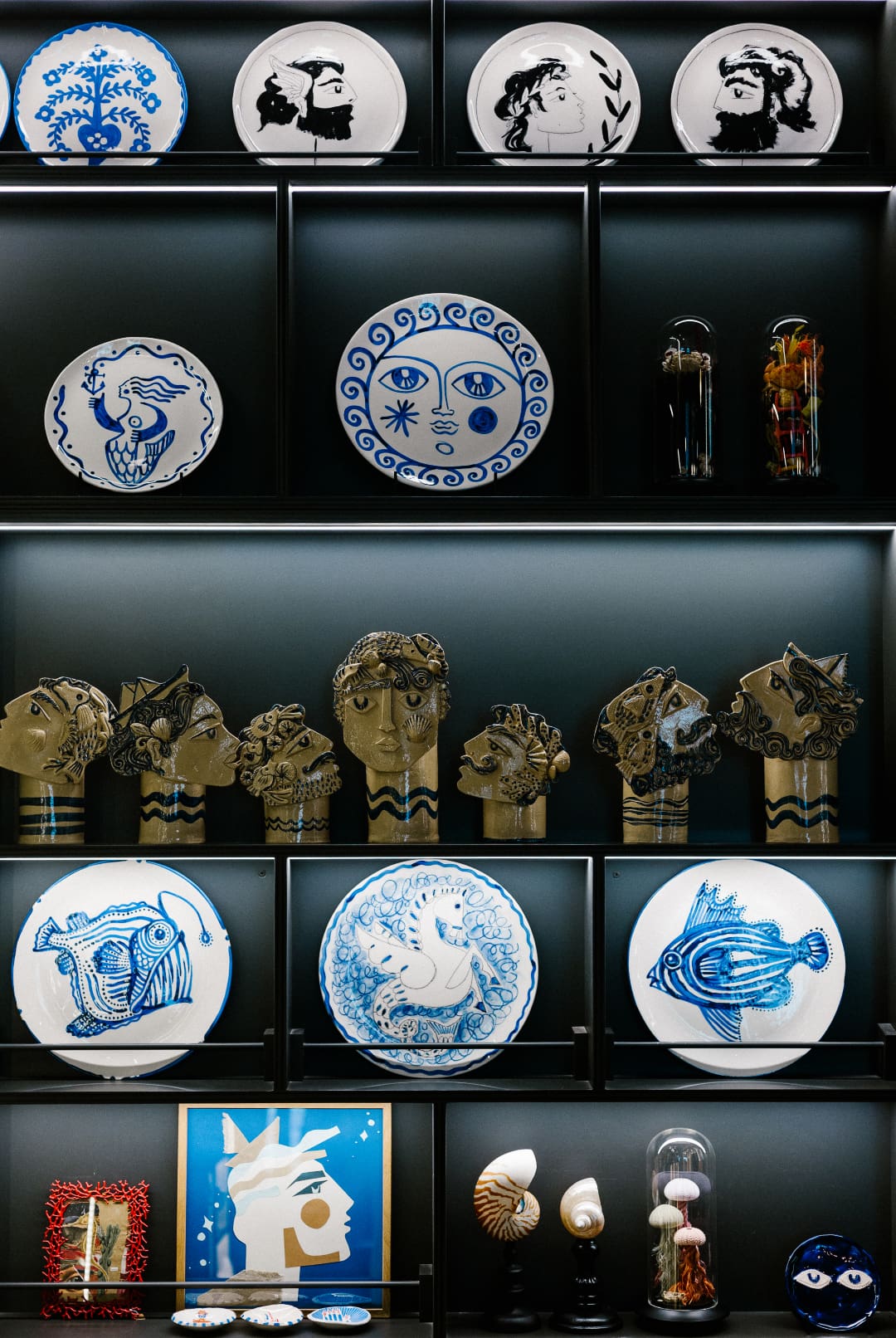
Oficina Marques in Lisbon is a cornucopia of handcrafted objects. Shelves are lined with figurative vessels and painted plates, while glass domes house sculptural curios. Every inch of the space is steeped in imagination, rich with colour and texture.
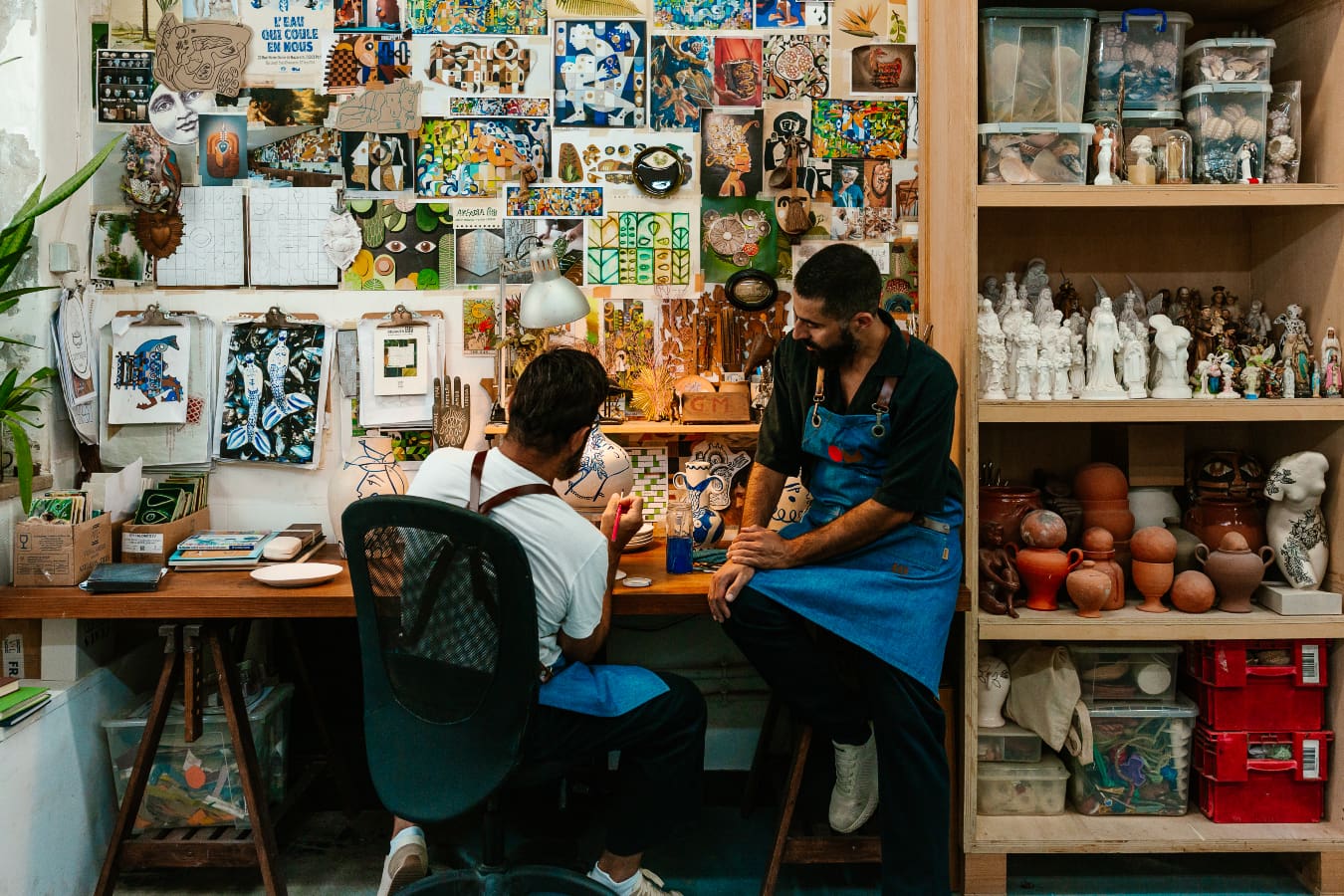
The studio’s founders, Gezo Marques and José Aparício Gonçalves, work across ceramics, wood and found materials. The shop leads to a gallery of larger assemblages, where salvaged objects take new forms as galloping horses and geometric interpretations of the human body. In the workshop at the back, mood boards of illustrations hint at works in progress. The pieces are often laced with humour, capturing the energy and optimism of their makers.
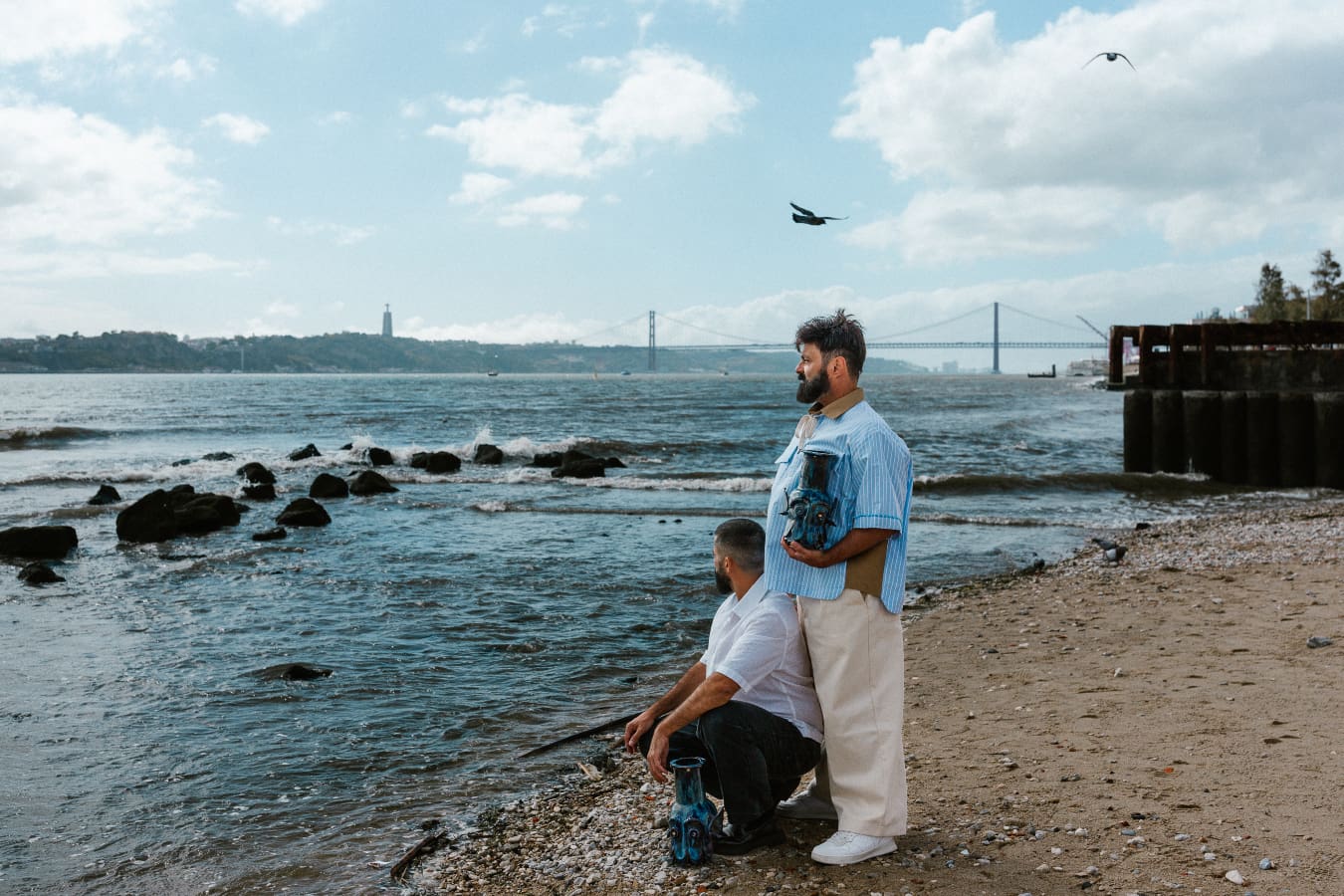
Lisbon is a port city, and its maritime history and relationship with water are recurring themes within their work. “The river has been food, work, passage and horizon,” they explain. “There is something almost mystical about Lisbon’s relationship with the docks.”
To mark a new exhibition at the freshly opened Andaz Lisbon, Oficina Marques sat down with Roadbook to discuss their creative partnership, the city’s complex transformation and the importance of building with your hands.
How did you both meet, and what inspired you to launch Oficina Marques together?
We met in 2014, when we were each developing our own individual artistic practices. We started sharing a workspace, where Oficina Marques is still based today.
Over time, our practices began to influence one another, and the shared studio became a space for developing projects together. Oficina Marques grew naturally from that process. In 2018, we officially launched the studio, giving a name and a structure to this shared way of working.
“Oficina” means workshop or studio in Portuguese. We chose this word because it reflects a place dedicated to making, experimentation and craftsmanship, where ideas become physical objects.
How do you describe your creative style?
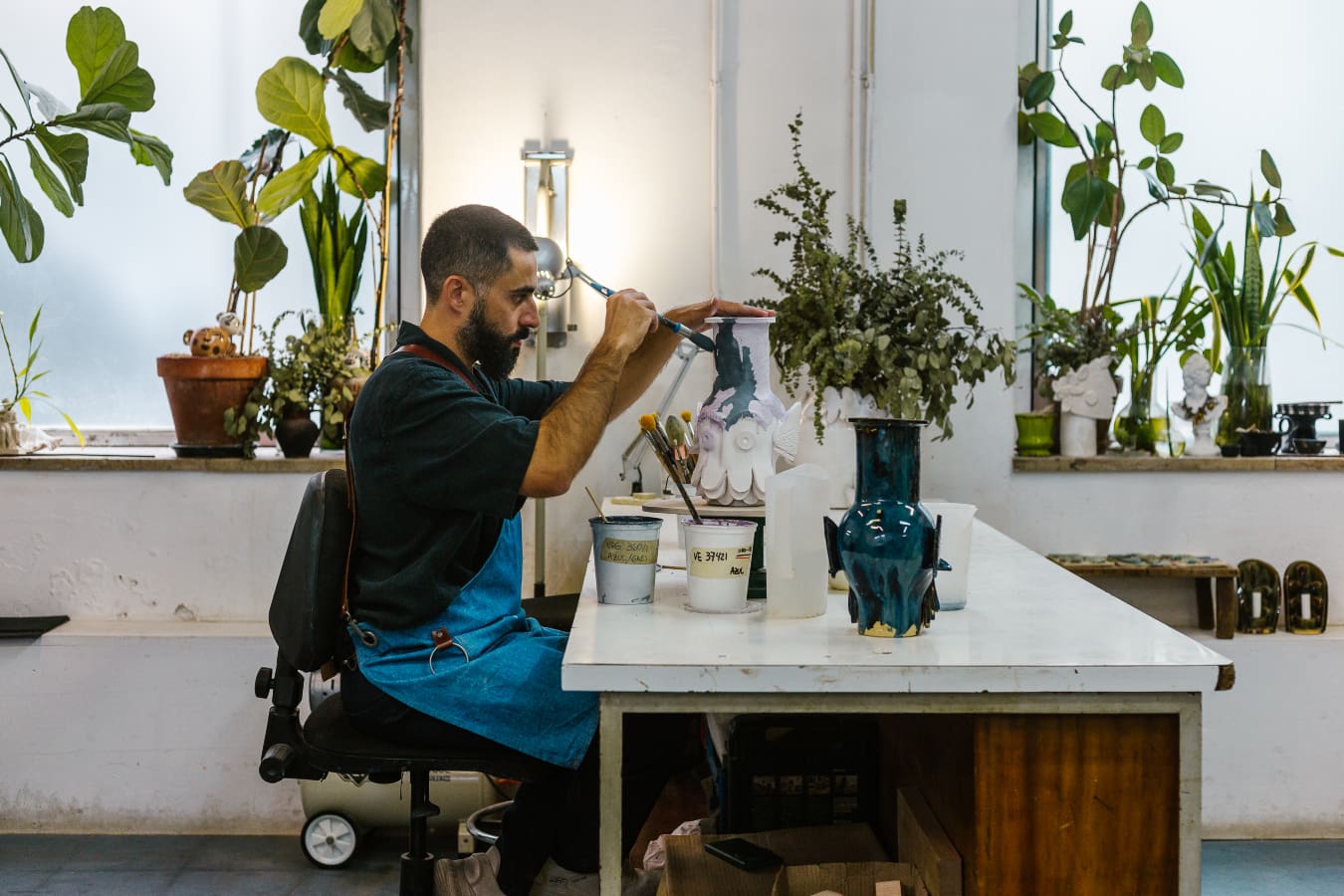
Our work is multidisciplinary. We are interested in creating objects and environments that exist somewhere between art, design and craft. We work with wood, ceramics, found objects, assemblage and other materials, often through very physical and manual processes. We like combining geometry with organic forms, strong colours with natural materials, and familiar objects with unexpected transformations.
There is also a certain sense of humour in what we do. We like objects to have a presence, almost as if they had their own personalities. At the centre of it is a desire to bring something extraordinary into everyday life.
Your work leans towards discarded and found objects. Where do you look for these?
We look for objects wherever they appear: old workshops, markets, antique shops, warehouses, street markets and sometimes simply by chance. We are attracted to things that have acquired character through use and already carry a history, particularly objects connected to work and everyday life.
Their materiality, construction, marks of use and unexpected shapes can all become starting points for a new work. What interests us is the potential hidden inside an object. We like the moment when something that had one specific function begins to take on another life.
"At the centre of or work is a desire to bring something extraordinary into everyday life"
What are the recurring themes in your work?
There are five territories that we continually return to: the sea, the wilderness, the body, faith and Lisboa.They are less like fixed subjects and more like territories of exploration. We are interested in nature, mythology, spirituality, desire and the relationship between the human body and the world around it.
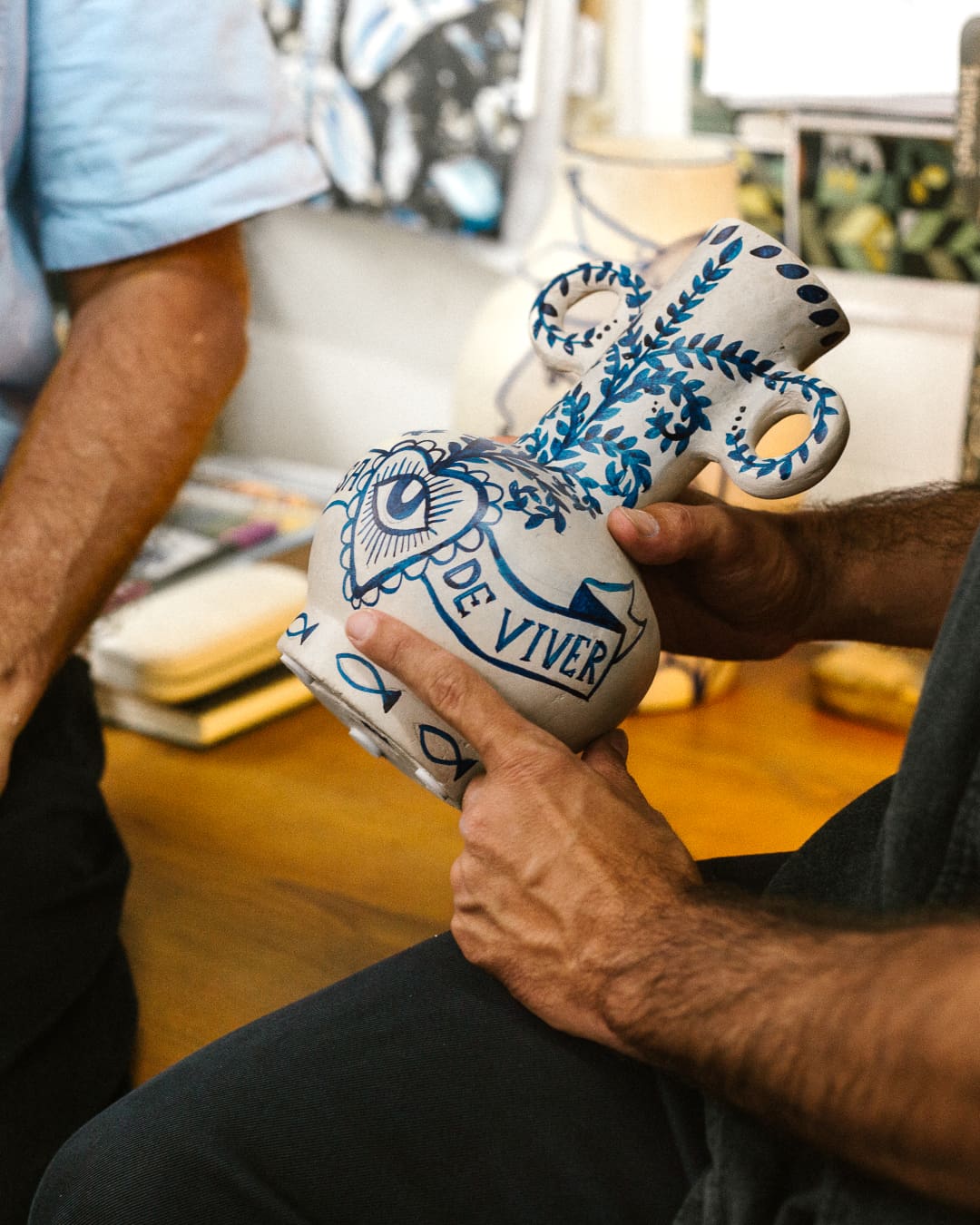
Transformation is also a recurring idea. An object can become a sculpture, a material can acquire another identity, and an everyday space can take on an almost dreamlike quality. All of these ideas connect to what we call Tusa de Viver, our way of looking at life with curiosity and our desire to keep finding beauty, humour and optimism in the everyday.
Tell us about the Water Horse.
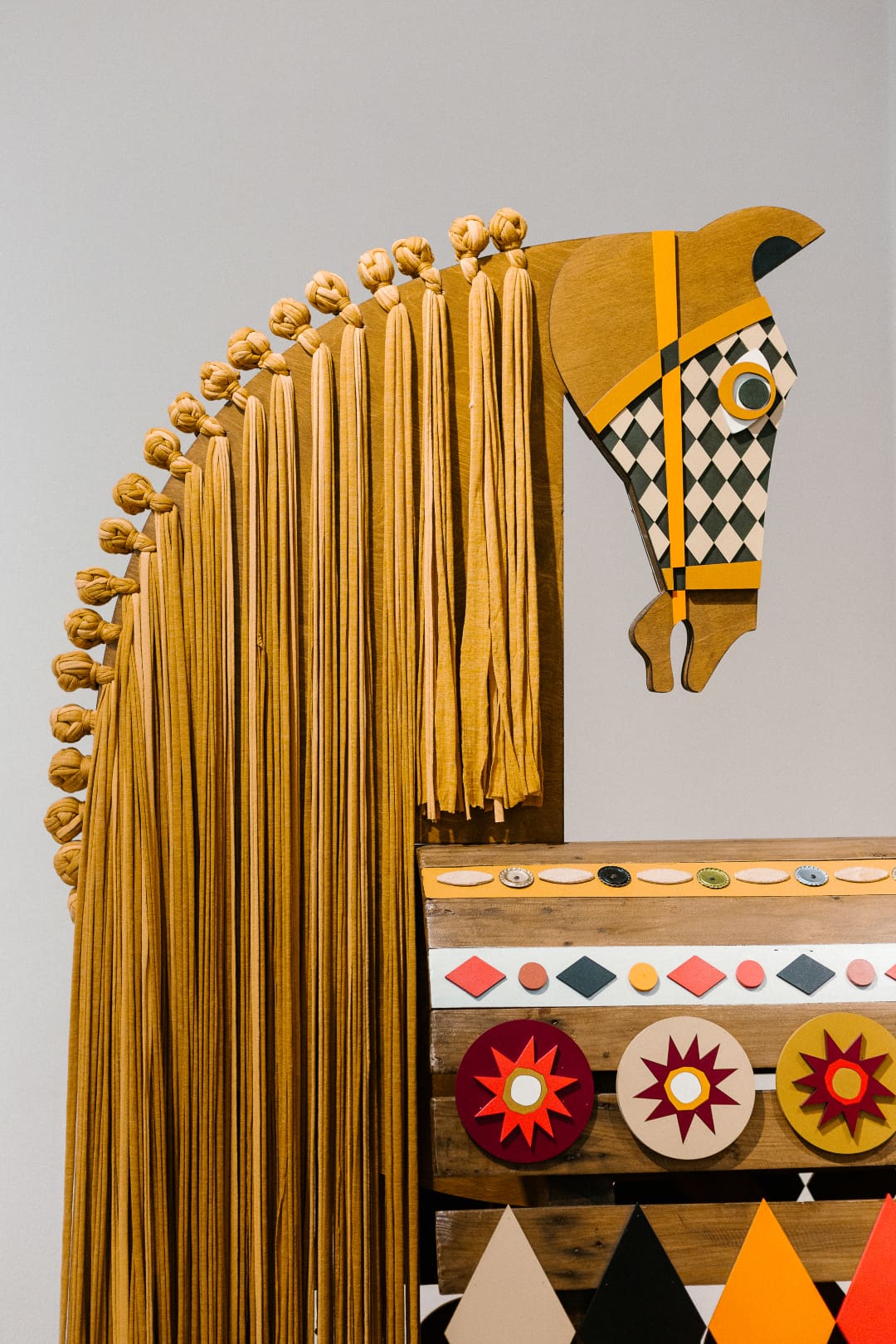
Water Horse is part of our Galope collection, which began with an old wooden trestle used in the leather-tanning process. We were fascinated by its shape and by the history embedded in the object. It was already part of a working landscape, marked by manual labour and the passage of time.
We transformed the trestle into the structure of a horse, allowing the original object to remain present while completely changing its identity. The process was about discovering the animal inside the existing structure. Rather than starting from a blank material, we worked with what was already there and allowed its proportions, imperfections and construction to guide the transformation.
What symbolism of the horse are you most drawn to?
If we were to describe Cavalo de Água on its own, the piece explores the relationship between the strength and beauty of the horse, and the freedom and ability of water to overcome obstacles.
How does Lisbon influence your work?
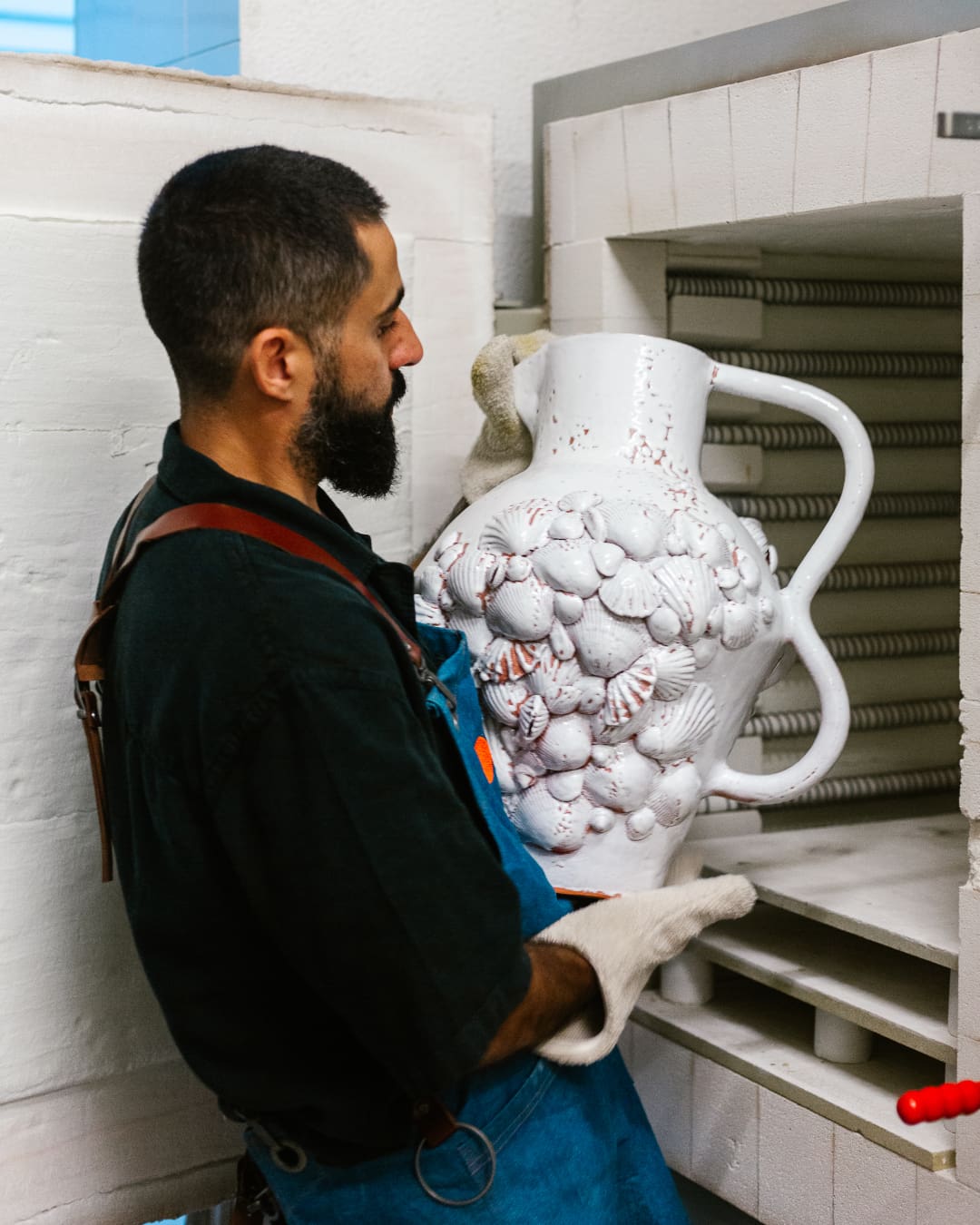
Lisbon is very present in our work, sometimes consciously and sometimes almost unconsciously. We are particularly fascinated by the archaeological layers of the city, especially in the Baixa. There are cities built on land. Lisboa was also built on water. Where the city now opens towards the Tagus, traces of other Lisboas remain beneath the streets and buildings. There was an older city of fishermen, sailors, craftspeople and merchants, with quays, markets and workshops connected to the river and the sea.
From Roman Olisipo and its trade in fish preparations to the varinas who later carried the sea through the streets, the river has been food, work, passage and horizon. We are fascinated by the idea that these lives are still somehow present beneath the city. The past has been covered by new layers, transformed and incorporated into what exists today. This way of thinking is very close to our own work. We are drawn to objects and materials that carry their previous lives within them.
Lisboa has a particular beauty in this coexistence of the monumental and the fragile, the ancient and the contemporary, the polished and the imperfect. Its light, colours and proximity to the Atlantic are also deeply embedded in our visual vocabulary.
"Lisbon has always had a strong creative culture rooted in small studios and makers. We want this to remain."
How is tourism changing Lisbon, and what does this mean for its creative communities?
It is a very complex transformation, and we experience both its opportunities and its consequences. Tourism has brought enormous international attention to Lisboa and created
many opportunities. At the same time, the transformation of the city has put pressure on neighbourhoods, housing and the communities that have traditionally lived and worked here.
For us, the important question is what kind of city is being created through this transformation. Lisboa has always had a strong creative culture rooted in small studios, workshops, independent artists and people making things with their own hands. We want this to remain, and for people to be able to develop long-term relationships with their neighbourhoods.
Being based in Bairro Alto makes us particularly aware of these changes. We are part of the contemporary cultural life of the neighbourhood, while also being conscious of the history and character that made the area interesting in the first place.
What do you love most about the city?
Lisbon’s strong personality and it carries its history visibly. There is a latent beauty in its scars, worn façades, colours and imperfections; traces left by those who lived here before us.
Lisboa is a port city, and we feel that very strongly. There is something almost mystical about its relationship with the docks, the river and the sea. It is a place of departures and arrivals, of movement, of people leaving and returning, and of things arriving from elsewhere and continuing their journey.
Sometimes Lisboa wakes up under a layer of fog. The city becomes quieter, almost suspended, and there is something in that atmosphere that reminds us of saudade. And then, very quickly, that stillness can be filled by an enormous desire to live.
That combination of fragility, history, sensuality and vitality is something we recognise deeply in our own work.
In a tumultuous world, your message is one of positivity, strength and courage.
We believe in staying connected to life, especially when the world feels uncertain. For us, positivity means continuing to look, make, imagine, and to find beauty in the world around us.
Oficina Marques’ world of colour, craft and imagination is now on view at Andaz Lisbon until 28 October 2026. Use code ROADBOOK to save 15 per cent on stays booked and taken before 31 December 2026. hyatt.com/andaz